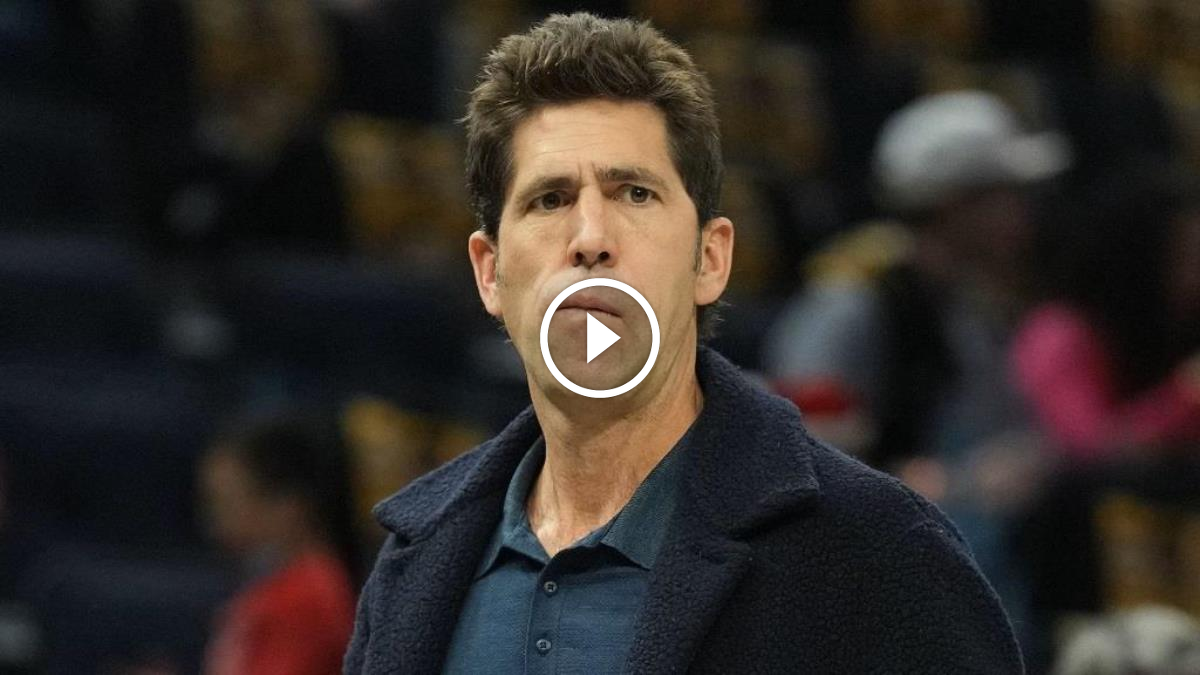
Bob Myers, former General Manager of the Golden State Warriors, is estimated to be worth around $40 million. Bob Myers built his wealth through a basketball career, first as a successful sports agent and then leading the Warriors to four NBA championships. After stepping down as GM, he remains involved in sports as an analyst and advisor.
| Net Worth | $40 million |
| Name | Robert Michael Myers |
| Birth Date | March 31, 1975 |
| Birthplace | Danville, California, USA |
| Height | 2.01 meters (6’7″) |
| Eye Color | Brown |
| Hair Color | Brown (graying) |
| Occupation | Former General Manager, (NBA) Golden State Warriors; Current ESPN Analyst; Washington Commander Advisor |
| Years Active | 2011-2023 (as GM) |
| Spouse | Kristen Myers |
| Ethnicity | White |
| Nationality | American |
| Religion | Unknown (publicly) |
| Awards | – 2x NBA Executive of the Year (2015, 2017) |
| Real Estate | Owns several properties in the San Francisco Bay Area |
| Cars | Owns several cars, including a Tesla Model S |
| Link | Wikipedia Loyola Law School Profile ESPN Countdown Profile |
What is Bob Myers’ Net Worth?
Bob Myers’ net worth is estimated to be $40 million. Myers’ career began far from the glitz and glamour of the NBA. He earned his law degree from UCLA and initially pursued a career in legal practice. However, his love for basketball never waned, and in 1998, he transitioned to become a sports agent. His meticulous work ethic and keen understanding of the business side of the game quickly earned him a reputation for securing lucrative contracts for his clients.
Over 14 years, he negotiated deals totaling over $575 million, representing players like Brandon Roy and Tyreke Evans. This period laid the foundation for his financial security and honed his skills in negotiation and talent evaluation, skills that would later prove invaluable in the NBA.
In 2011, the Golden State Warriors, then a struggling franchise, took a chance on the relatively unknown Myers, appointing him as assistant general manager. His impact was immediate. His strategic drafting of stars like Draymond Green and Klay Thompson, coupled with the fortuitous acquisition of Stephen Curry, laid the groundwork for a championship contender. In 2012, he was promoted to general manager, solidifying his role as the architect of the team’s future.
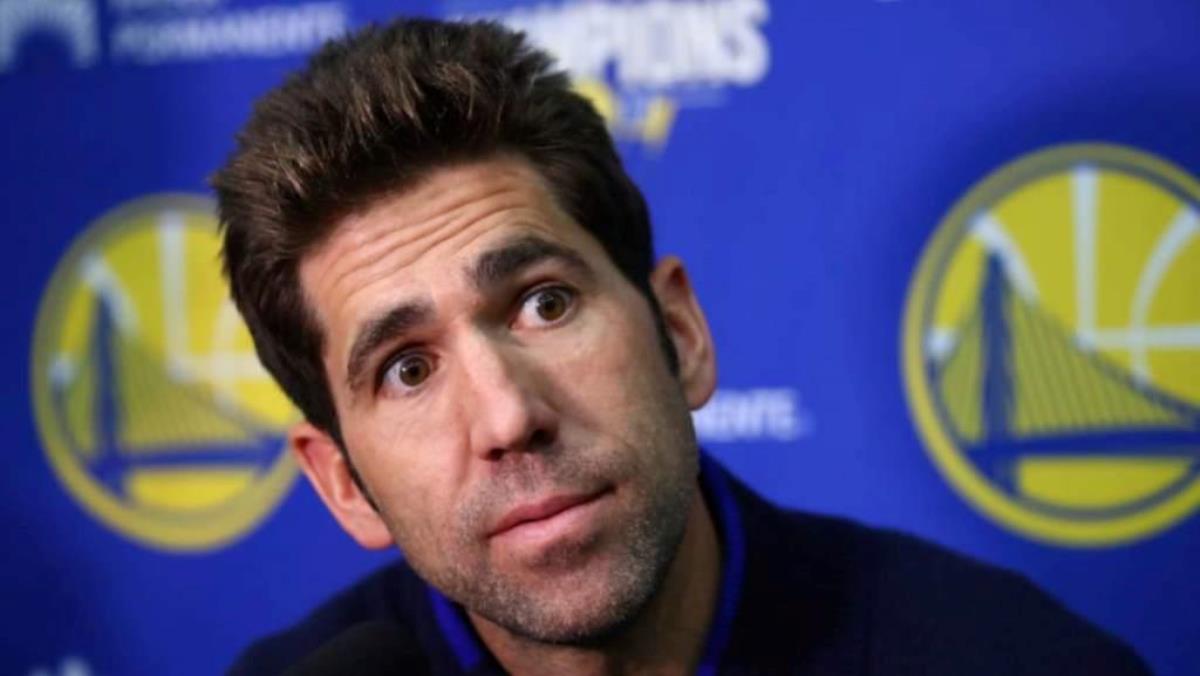
Under Myers’ leadership, the Warriors transformed into a dominant force. He orchestrated trades that brought in Andre Iguodala and Kevin Durant, forming a superteam that went on to win three consecutive championships between 2015 and 2018. In 2022, after navigating injuries and roster changes, he masterfully brought the Warriors back to the top, securing their fourth title. These victories not only cemented his legacy as one of the NBA’s most successful executives but also translated into significant financial gains.
Myers’ success extends beyond championships and monetary figures. He has garnered widespread respect for his integrity, collaborative leadership style, and commitment to building a sustainable winning culture. He has also become a vocal advocate for social justice issues, using his platform to promote positive change. His story serves as an inspiration to aspiring young professionals, demonstrating that hard work, passion, and strategic thinking can lead to success in even the most competitive arenas.
Early Life and Education
Born in Danville, California, on March 31, 1975, Bob Myers was raised with basketball woven into the fabric of his life. His father, a high school coach, instilled a love for the game, while his brother’s rowing career instilled a competitive spirit. While he excelled at Monte Vista High School, his size and playing style didn’t align with the expectations of major college programs. Undeterred, Myers found his opportunity at UCLA, joining the Bruins as a walk-on in 1993.
Despite limited playing time, Myers embraced the UCLA culture, learning the nuances of the game from legendary coach Jim Harrick. His dedication and basketball IQ earned him the respect of his teammates, culminating in a thrilling 1995 NCAA championship run. More importantly, UCLA exposed him to the world of professional basketball, igniting a desire to be part of the industry beyond the court.
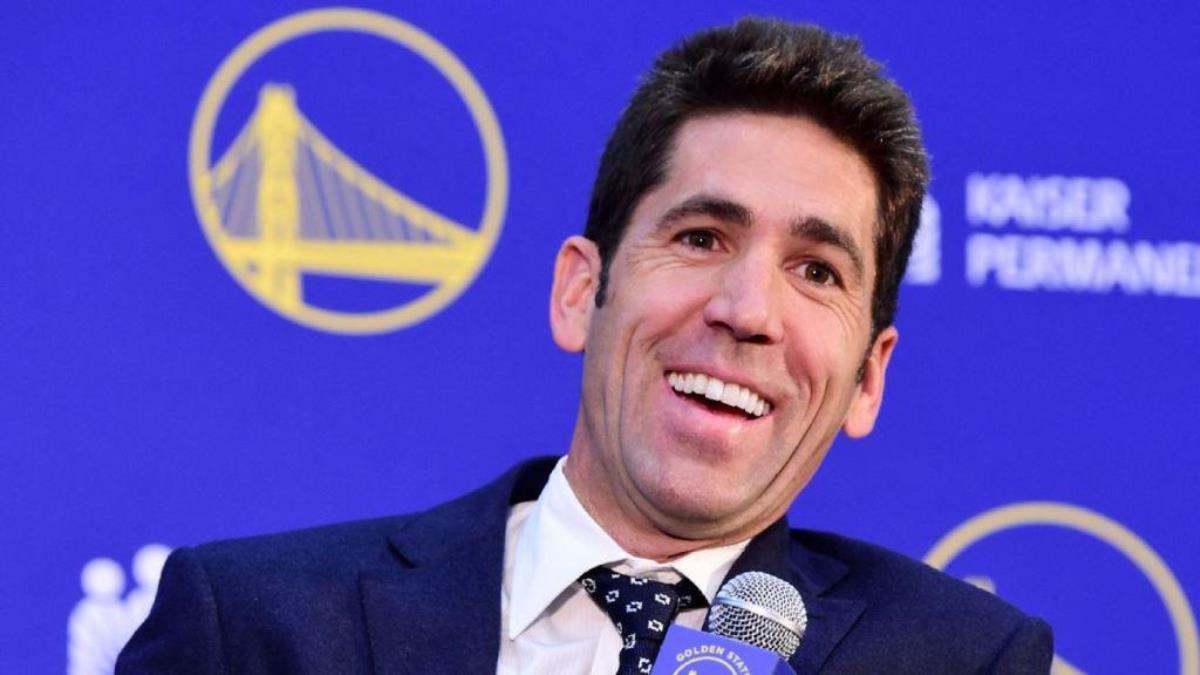
After graduating with a degree in Business/Economics in 1998, Myers embarked on a career in sports agency. Introduced to renowned agent Arn Tellem by Coach Harrick, he began as an intern while earning his Juris Doctor degree at Loyola Law School. This unique combination of basketball knowledge and legal expertise proved invaluable. Myers quickly mastered the art of contract negotiation and player representation, rising to become one of Tellem’s top associates.
Over the next 14 years, Myers honed his skills at SFX Sports and Wasserman Media Group, representing stars like Brandon Roy and Tyreke Evans. He navigated the complexities of player contracts, free agency, and trade negotiations, gaining invaluable insights into the inner workings of the NBA. His understanding of the league’s landscape, coupled with his genuine rapport with players, laid the groundwork for his future success as a general manager.
In 2011, the Golden State Warriors, a struggling franchise, saw a spark in Myers’ potential. He joined the organization as assistant general manager, quickly making his mark with shrewd draft picks like Draymond Green and Klay Thompson. His bold decision to acquire Andre Iguodala in 2013 proved pivotal, solidifying the team’s championship aspirations.
Myers’ leadership, combined with the brilliance of coach Steve Kerr and the talent of Stephen Curry, ignited a golden era for the Warriors. Four NBA championships, five Finals appearances, and a record-breaking 73 wins in a season cemented his place among the league’s elite executives.
Career
Bob Myers’ basketball dreams materialized at UCLA, where he played alongside future stars like Baron Davis and J.R. Henderson. Despite limited playing time, he absorbed the intricacies of the game, laying the foundation for his future success. After graduating in 1997, he traded his jersey for a microphone, becoming a UCLA basketball radio commentator. The experience honed his communication skills and deepened his understanding of the sport’s dynamics.
In 2002, Myers embarked on a new chapter, joining Wasserman Media Group, a prominent sports agency. Here, he navigated the complex world of player representation, forging relationships with athletes and gaining invaluable insights into the business side of basketball. His legal background, acquired at Loyola Law School, proved instrumental in deciphering contracts and negotiating deals.
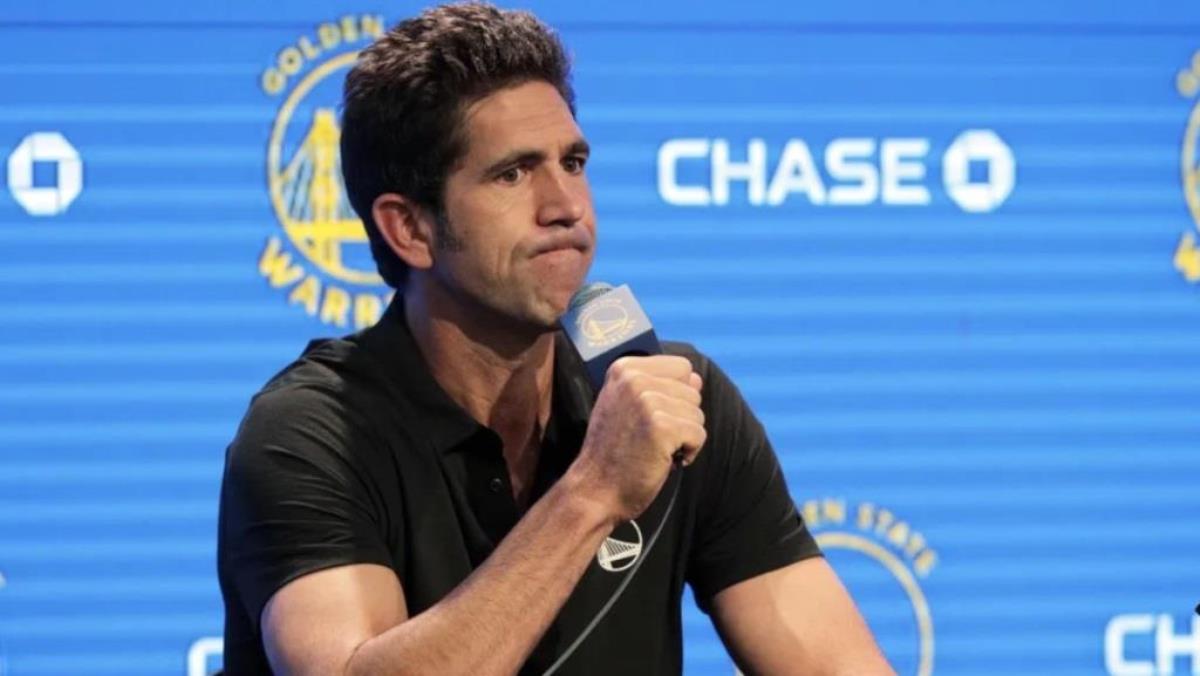
In 2011, the Golden State Warriors were a struggling franchise searching for direction. Myers, then a relatively unknown figure, joined as Assistant General Manager and Vice President of Basketball Operations. His arrival marked a turning point.
Myers’ impact was immediate. He spearheaded the 2012 draft, selecting Draymond Green, Harrison Barnes, and Festus Ezeli, players who would become integral parts of the championship core. He recognized the potential in Stephen Curry, a gifted scorer often overlooked due to his size. The gamble paid off, as Curry blossomed into a global icon and redefined offensive basketball.
Myers’ brilliance extended beyond the draft. He orchestrated savvy trades, acquiring Andre Iguodala and Klay Thompson, who formed a defensive juggernaut alongside Green. He navigated free agency, bringing in veterans like Shaun Livingston and Andre Iguodala, who provided invaluable leadership and experience. These strategic moves transformed the Warriors from a lottery team to a championship contender.
The fruits of Myers’ labor became evident in 2015, when the Warriors, led by the electrifying “Splash Brothers” Curry and Thompson, clinched their first NBA title in 40 years. It was the beginning of a dynasty. Three more championships followed in 2017, 2018, and 2022, solidifying the Warriors’ place among the greatest teams ever assembled.
Myers’ success wasn’t solely measured in trophies. He fostered a culture of collaboration and trust within the organization, empowering his staff and valuing diverse perspectives. He championed player development, turning raw talent into polished NBA stars. He built a sustainable model, ensuring the Warriors’ dominance wouldn’t be a fleeting moment.
In 2023, after a remarkable 12-year run, Myers stepped down as Warriors’ General Manager. He left behind a legacy of unparalleled success, having transformed the franchise from obscurity to a global powerhouse. Today, he serves as an analyst for ESPN and an advisor to the Washington Commanders, sharing his wisdom and expertise with a new generation of sports executives.
Also Read: How Much Did Björn Borg Earn? Net Worth and Career Earnings
Personal Life
Bob Myers’ passion for basketball blossomed early on. He played at Monte Vista High School, initially aiming to pursue rowing like his brother. A chance encounter with UCLA assistant coach Steve Lavin, however, led him to try out for the basketball team, a decision that would shape his future. He went on to play for the UCLA Bruins from 1993 to 1997, even being part of their 1995 NCAA championship team.
Despite his love for the game, Myers’ professional aspirations extended beyond playing. He pursued a law degree at Loyola Law School while simultaneously interning at Tellem and Associates, a prominent sports agency. This experience, coupled with his own background as a player, proved invaluable. Myers honed his negotiation skills and developed a deep understanding of the athlete’s perspective, becoming a trusted advisor to numerous basketball stars.
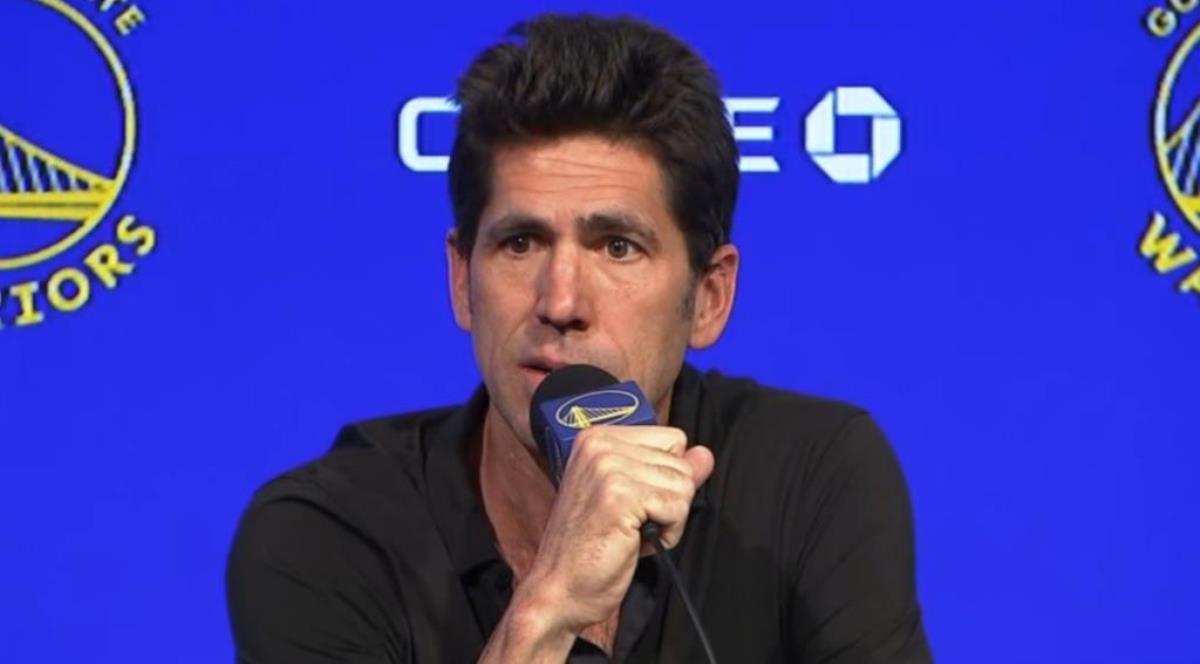
In 2011, Myers’ career took a significant turn when he joined the Golden State Warriors as an assistant general manager. This marked the beginning of a remarkable journey that would see him become a key architect of the team’s championship success. However, amidst the demanding nature of his role, Myers prioritizes his family life. He is married to Kristen Myers, and the couple has been blessed with two daughters. While details about their private life remain guarded, Myers has acknowledged the importance of finding a healthy balance between his professional commitments and his role as a husband and father.
Beyond his professional accolades, Myers is recognized for his character and integrity. He is known for his collaborative approach, fostering a positive and respectful work environment. His commitment to social responsibility extends beyond the basketball court. He has actively participated in the Volunteer Income Tax Assistance program, assisting low-income families with tax preparation. Additionally, he remains involved with his alma mater, UCLA, and is a vocal advocate for various community initiatives.
In 2023, Myers stepped down from his role as general manager, transitioning to an advisory role within the Warriors’ organization. This decision, he stated, was made to dedicate more time to his family. However, his impact on the team and the broader basketball community remains undeniable. Bob Myers’ story serves as an inspiration, demonstrating that success can be achieved not only through professional triumphs but also by fostering strong personal connections and upholding strong values.
Philanthropy and Activism
Bob Myers’ upbringing in a small Pennsylvania town instilled in him a strong sense of community and social responsibility. Witnessing firsthand the challenges faced by underprivileged individuals ignited a desire to make a positive difference. This early exposure, coupled with his personal experiences navigating the sports world, shaped his commitment to social justice and equity.
One of Myers’ most notable philanthropic endeavors is the Warriors Community Foundation, established in 2017. The foundation focuses on empowering youth through education, health, and wellness initiatives. They’ve awarded millions of dollars in grants to organizations working towards closing the achievement gap and providing educational opportunities for underserved communities. Notably, the foundation launched the “Read to Achieve” program in 2019, aiming to improve literacy rates among Bay Area schoolchildren.
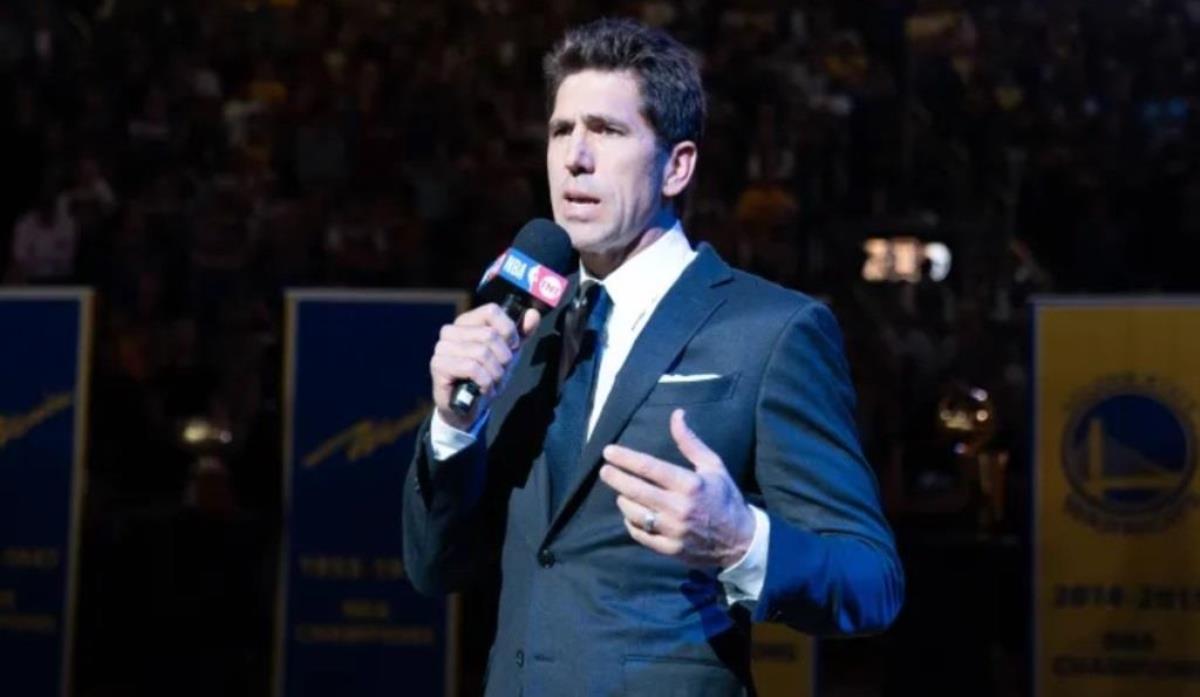
Myers recognizes the power of basketball as a tool for social good. He has spearheaded several initiatives that leverage the Warriors’ platform to promote understanding and inclusivity. In 2019, the Warriors hosted the “Race & Relations Summit,” bringing together athletes, coaches, and community leaders to discuss racial issues and advocate for social justice. The team also partnered with the NBA’s “We Heard You” campaign, promoting voting rights and civic engagement.
Myers’ philanthropic reach extends beyond the United States. In 2018, he traveled to Rwanda with the Warriors to participate in a basketball camp and community service projects. This trip highlighted the importance of global citizenship and inspired Myers to support international organizations working on education and development initiatives. Additionally, Myers is a vocal advocate for environmental sustainability, partnering with organizations like “Plant a Tree” to promote ecological awareness.
Myers’ commitment to social change transcends financial contributions. He actively participates in initiatives, connecting with individuals and communities he supports. He mentors underprivileged youth, volunteers at local events, and leverages his platform to raise awareness for important causes. This personal touch fosters genuine connections and amplifies the impact of his philanthropic efforts.
Assets and Investments
In 2011, Bob Myers joined the Golden State Warriors as Assistant General Manager, marking a pivotal point in his career. His strategic prowess and ability to identify talent were instrumental in building a championship team. But Myers’ influence extended beyond the draft board. He displayed a keen understanding of the financial aspects of running a franchise, recognizing the importance of balancing competitiveness with financial responsibility.
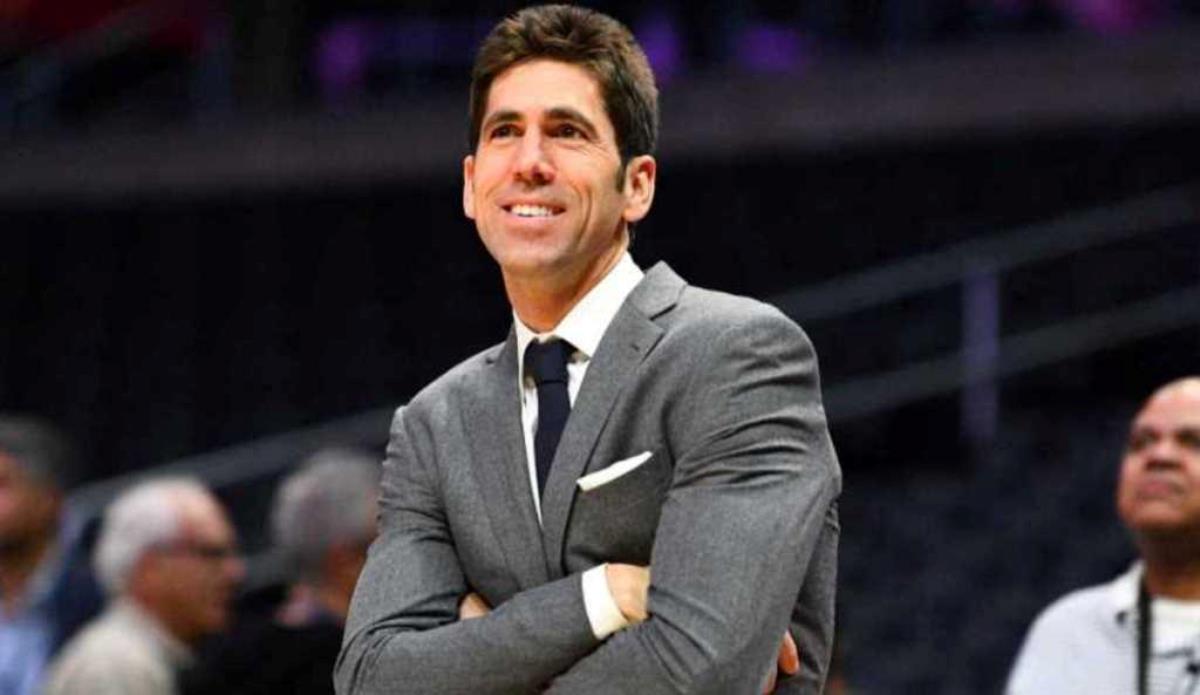
Myers’ entrepreneurial spirit extends beyond the basketball court. He co-founded YFM Equity Partners, a venture capital firm focused on early-stage investments. This venture demonstrates his interest in fostering innovation and supporting promising startups across various industries. By diversifying his portfolio, Myers safeguards his financial security and explores his passion for business ventures beyond the sports world.
Beyond his professional endeavors, Bob Myers is actively involved in giving back to the community. He is dedicated to various philanthropic initiatives, focusing on promoting education and empowering youth. This involvement highlights his commitment to social responsibility and his desire to make a positive impact beyond the realm of business and sports.
Collaboration
Before becoming a legend in the front office, Bob Myers journeyed through the NBA on the other side of the court. His career as a sports agent brought him face-to-face with players, coaches, and executives, fostering crucial relationships and a deep understanding of the human dynamics of the league. This experience became invaluable when he joined the Warriors in 2011, as he prioritized open communication and collaboration across all levels of the organization.
One of Myers’ defining traits is his ability to delegate effectively. He empowers his staff, from scouts to coaches, to contribute their expertise, fostering a sense of ownership and collective responsibility. This approach is evident in the Warriors’ draft history, where talents like Draymond Green and Jordan Poole were identified and championed by team members outside the spotlight.
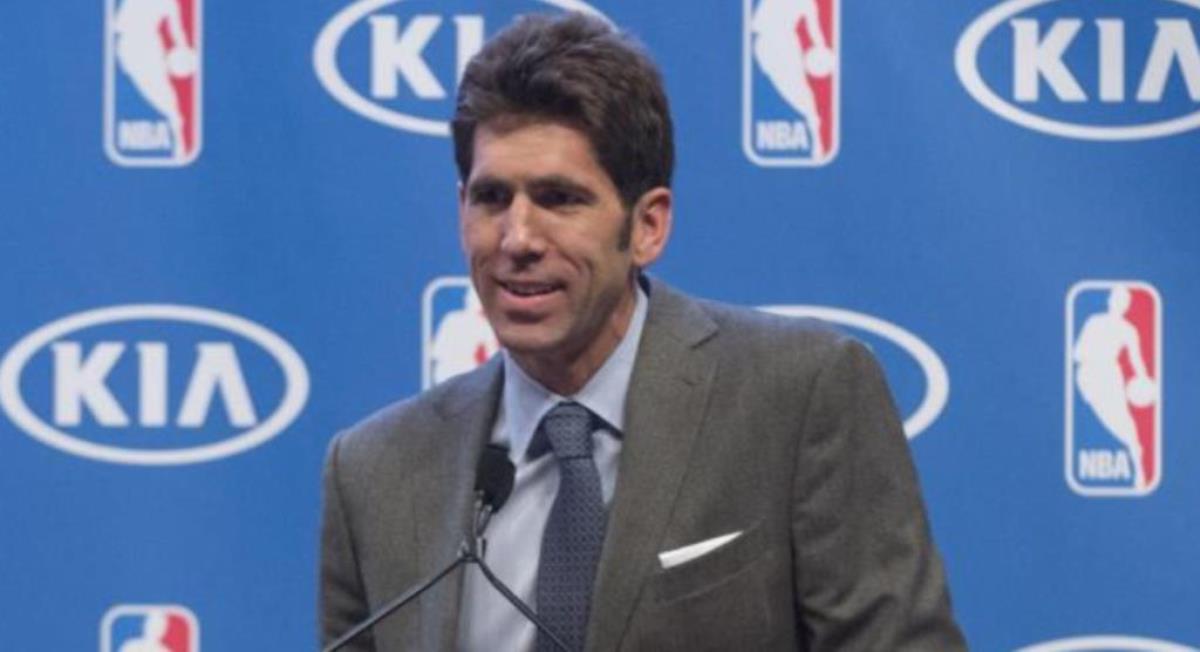
A cornerstone of the Warriors’ success is the collaborative partnership between Myers and Head Coach Steve Kerr. Their contrasting styles – Myers, the calm negotiator, and Kerr, the passionate leader – complement each other perfectly. They prioritize open communication, honest feedback, and a shared vision for the team, resulting in decisions made not by individual egos, but by a unified front.
Myers fosters a culture of open communication within the organization. He regularly holds meetings with players, coaches, and staff, encouraging honest feedback and diverse perspectives. This creates an environment where mistakes are seen as learning opportunities, and challenges are tackled collaboratively. This open dialogue led to crucial roster decisions, like the trade for Kevin Durant, which were made with input from multiple voices within the organization.
The impact of Bob Myers’ collaborative approach extends beyond the immediate success of the Warriors. He has become a mentor and inspiration for executives across the league, demonstrating the power of teamwork and shared decision-making. His influence is evident in the growing trend of collaborative front offices, where diverse perspectives are valued and empowered to contribute to collective success.
Awards and Nomination
Bob Myers’ journey began in 1998 when he joined the Los Angeles Lakers as a video coordinator, analyzing game footage and assisting the coaching staff. His meticulous attention to detail and ability to identify hidden patterns caught the attention of Phil Jackson, then the Lakers’ head coach. Impressed by his work ethic and basketball IQ, Jackson brought Myers under his wing, mentoring him on the intricacies of team building and championship culture.
In 2004, Myers joined the Portland Trail Blazers as an assistant general manager, where he honed his skills in scouting, player development, and contract negotiations. His strategic approach and ability to identify undervalued talent helped the Blazers draft future All-Stars like LaMarcus Aldridge and Brandon Roy.
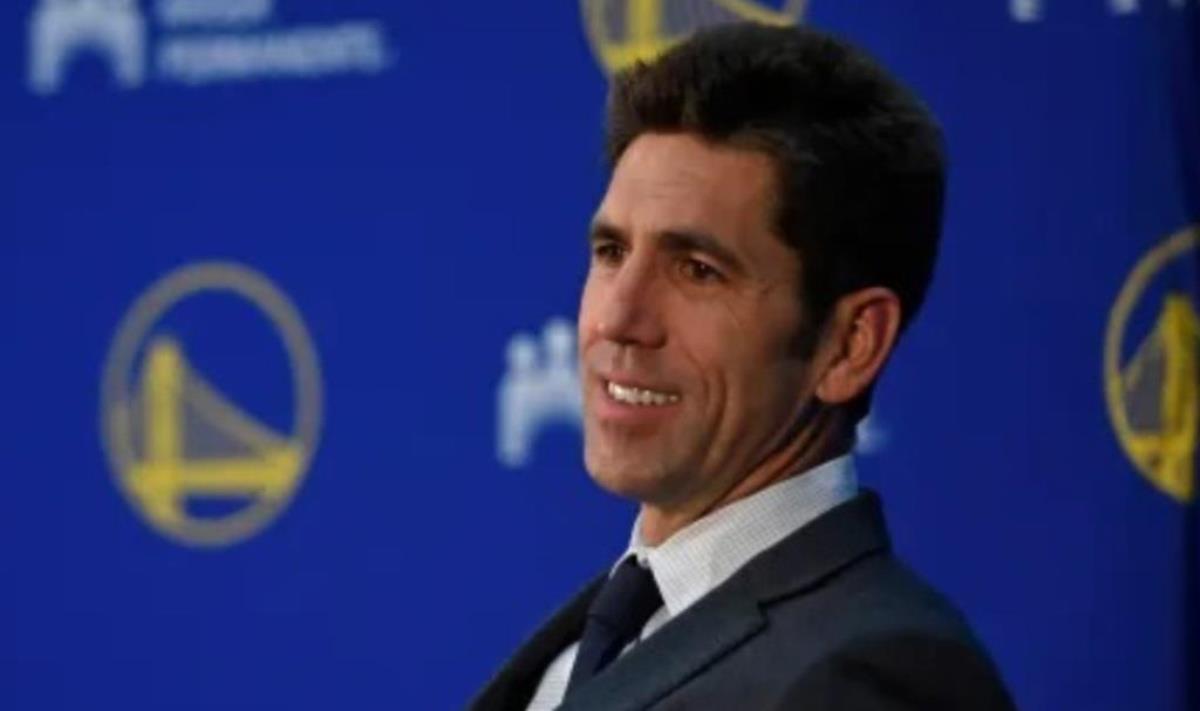
In 2011, Bob Myers returned to his hometown team, the Golden State Warriors, as assistant general manager. The Warriors were at a crossroads, struggling to find sustained success. Myers, alongside owner Joe Lacob, embarked on a transformative journey, prioritizing player development, drafting wisely, and making calculated trades.
His first major move was the selection of Draymond Green in the 2012 draft, a player initially overlooked by many teams. Green’s defensive prowess and leadership became a cornerstone of the Warriors’ future success.
In 2012, Bob Myers was promoted to general manager, and his impact was immediate. He orchestrated the trade for Klay Thompson, a sharpshooting guard who would become a vital part of the Warriors’ championship core. He also drafted Stephen Curry, a young point guard with immense potential, who blossomed into a global superstar under Myers’ guidance.
Bob Myers’ achievements haven’t gone unnoticed. He has been named NBA Executive of the Year twice (2015, and 2017), a testament to his strategic brilliance and ability to build a championship-caliber team. He has also been recognized for his contributions to the community, receiving the NBA Cares Community Assist Award in 2018.
Also Read: How Much Did Bob Whitfield Earn? Net Worth and Career Earnings
Significant Life events
Born in Stanford, California, in 1959, Bob Myers’ life initially seemed destined for a different path. He excelled in academics, graduating from UCLA with a degree in history before earning his law degree from Loyola Law School in Los Angeles. His early career saw him practicing law, specializing in labor and employment, a skillset that would later prove invaluable in the complex world of professional sports.
In 2004, a chance encounter with then-Warriors owner Chris Cohan on a golf course presented Myers with an unexpected opportunity. Despite having no prior experience in basketball operations, Cohan was impressed by Myers’ sharp intellect and strategic mind. He offered him a position as assistant general manager, a gamble that would forever alter both their lives.
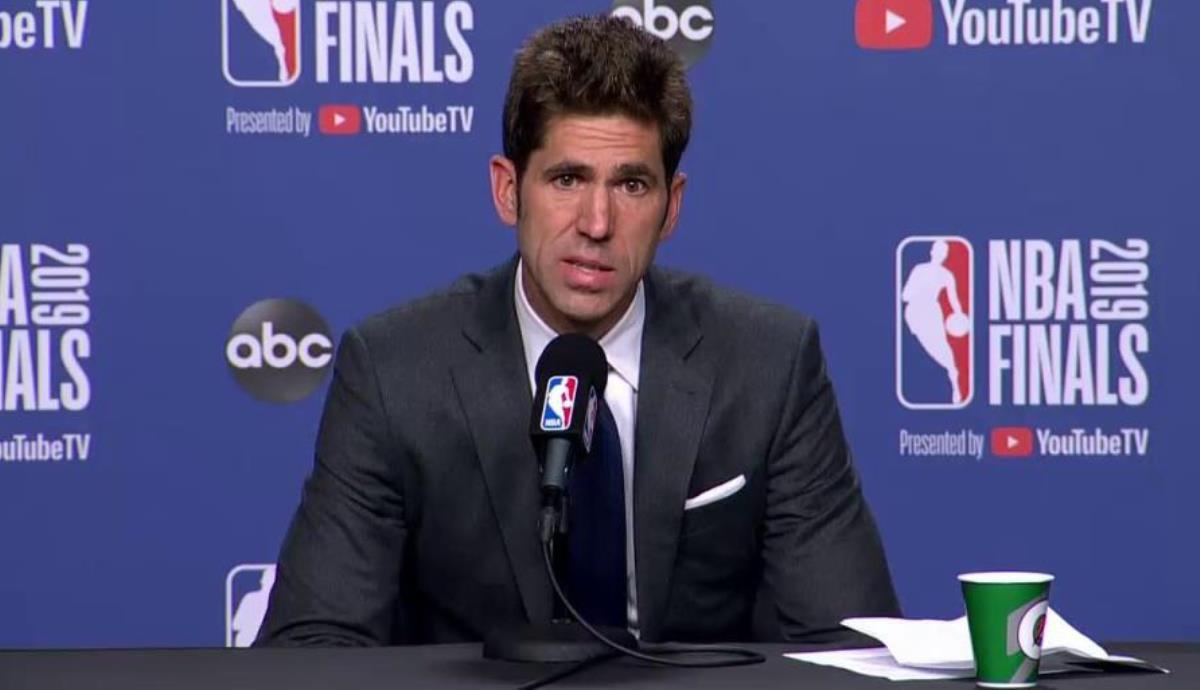
Bob Myers embraced the challenge with the same diligence he applied to his legal career. He dove headfirst into the world of basketball, immersing himself in scouting, analytics, and the intricacies of team building. His early years were marked by calculated risks and bold draft picks. In 2009, he selected Stephen Curry, a slender guard with an unorthodox shooting style, with the seventh overall pick, a decision that would redefine the NBA landscape. He followed it up with Draymond Green and Klay Thompson, astute selections that laid the foundation for the Warriors’ future success.
The arrival of head coach Steve Kerr in 2014 marked a turning point. Myers and Kerr, with their shared philosophies and complementary skills, formed a formidable partnership. Together, they fostered a culture of innovation, player development, and tactical brilliance. The Warriors, fueled by Curry’s electrifying play and the “Strength in Numbers” philosophy, embarked on a historic run, winning three championships in four years (2015, 2017, 2018).
Despite the accolades, Myers faced new challenges. Injuries and free agency losses threatened to derail the Warriors’ momentum. Yet, Myers remained undeterred. He orchestrated savvy trades, drafted future stars like Jordan Poole, and maintained the team’s championship aspirations. In 2022, the Warriors rose once again, reclaiming the title and solidifying their place as one of the most dominant dynasties in NBA history.
Bob Myers’ impact extends far beyond his championship rings. He has been a vocal advocate for analytics and player development, influencing how teams across the league operate. He has also championed diversity and inclusion, fostering a culture of respect and opportunity within the Warriors organization.
Impact and legacy
Bob Myers’ career began far from the bright lights of the NBA. His journey started within the confines of a sports agency, representing athletes across various sports. This experience honed his understanding of player contracts, negotiations, and the complex dynamics of professional sports. In 2011, the Golden State Warriors, then a struggling team, took a chance on his expertise, appointing him as assistant general manager. This marked a turning point, not just for Myers, but for the Warriors’ future.
One of Myers’ first impactful moves was drafting Draymond Green in 2012. While Green wasn’t a traditional high pick, Myers saw his leadership potential and defensive prowess, a decision that proved pivotal in the years to come. He went on to draft Klay Thompson the following year, further solidifying the core around the already-established Stephen Curry.
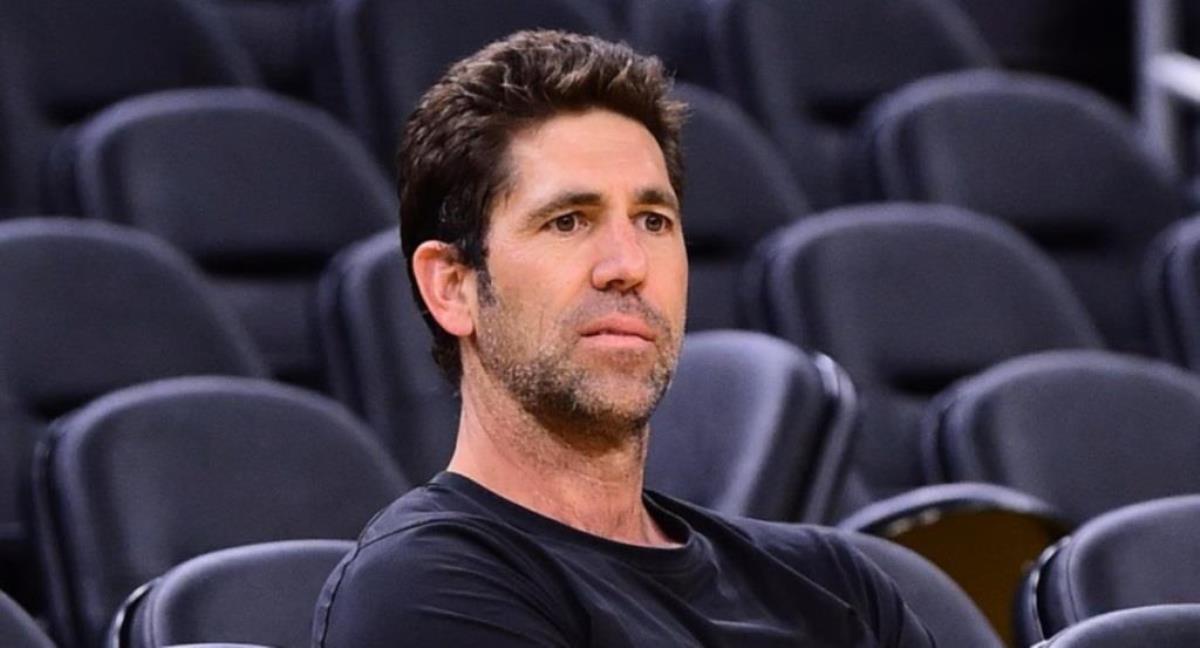
However, Bob Myers’ masterstroke came in 2015, when he made the audacious decision to sign Kevin Durant, a move that defied the salary cap constraints and shocked the league. This “superteam” formation instantly transformed the Warriors into title contenders, and the gamble paid off handsomely. The Warriors went on to win three championships in four years (2015, 2017, 2018), establishing themselves as a dominant force in the NBA.
While championships are the ultimate testament to success, Myers’ impact extends far beyond trophies. He fostered a culture of collaboration and innovation within the Warriors organization, prioritizing analytics and player development alongside traditional scouting methods. This forward-thinking approach helped the Warriors stay competitive even after Durant’s departure in 2019, culminating in another championship win in 2022.
Bob Myers’ tenure with the Golden State Warriors has been nothing short of remarkable. He transformed a struggling franchise into a dynasty, making bold decisions that redefined the team’s identity and established it as a global basketball powerhouse. Beyond the wins, he championed a culture of player empowerment and organizational excellence, leaving a lasting legacy that extends far beyond the hardwood.
FAQs
What is Bob Myers’ estimated net worth in 2024?
Bob Myers’ estimated net worth in 2024 is around $40 million.
How tall is Bob Myers?
Bob Myers’ height is estimated to be between 5′ 10″ and 6′ 0″ tall.
Where was Bob Myers born and raised?
Bob Myers was born and raised in New York City, USA.
What college did Bob Myers attend?
Bob Myers attended the University of California, Los Angeles (UCLA), where he earned a degree in history in 1997.
Is Bob Myers married?
Yes, Bob Myers is married to Kristen Myers.
Does Bob Myers have children?
Myers and his wife, Kristen, have three daughters.
What was Bob Myers’ role with the Golden State Warriors?
Bob Myers served as the General Manager (GM) and President of Basketball Operations for the Golden State Warriors from 2012 to 2023. He oversaw the team’s basketball operations, including player acquisition, development, and coaching staff management, leading them to four NBA championships during his tenure.
What is Bob Myers currently doing?
Currently, Bob Myers works as an NBA analyst for ESPN and an advisor for the Washington Commanders of the National Football League (NFL).
Who did Bob Myers collaborate with to build the championship-winning Warriors team?
Bob Myers collaborated with several key individuals in building the Golden State Warriors’ successful team, including:
- Head Coach Steve Kerr: Myers hired Steve Kerr in 2014, whose coaching philosophy and strategies played a crucial role in the team’s achievements.
- Players: Myers made key player acquisitions and contract extensions, including Stephen Curry, Klay Thompson, Draymond Green, Andre Iguodala, Kevin Durant, and Andrew Wiggins, who formed the core of the championship teams.
- Front Office Staff: Myers assembled a talented front-office staff with expertise in scouting, player development, and salary cap management.
What awards did Bob Myers receive during his career?
Bob Myers was recognized for his exceptional leadership with the following achievements:
- Two-time NBA Executive of the Year (2015, 2017): This prestigious award acknowledges the league’s most outstanding general manager.
- Four NBA Championships with the Golden State Warriors (2015, 2017, 2018, 2022): Leading the Warriors to multiple championships solidifies his place as one of the most successful executives in NBA history.
What was a significant life event for Bob Myers?
Stepping down as President and GM of the Golden State Warriors in May 2023 marked a significant life event for Bob Myers. This decision allowed him to pursue new opportunities in broadcasting and broaden his influence in the sports world.
What impact did Bob Myers have on the NBA?
Bob Myers’ impact on the NBA is undeniable. He is credited with:
- Building a dynasty: He spearheaded the creation of a dominant team by building a strong culture, identifying and acquiring talented players, and assembling a skilled coaching staff.
- Shifting the tactical landscape: The Warriors, under Myers’ leadership, popularized the “small-ball” strategy, emphasizing speed, spacing, and three-point shooting, influencing the game’s evolution.
Has Bob Myers ever faced any controversies?
While not directly involved in any major controversies, Bob Myers’ decisions as GM, such as the signing of Kevin Durant in 2016, received criticism from some fans and analysts who felt it undermined the “organic” development of the Warriors’ championship core.
What are some interesting facts about Bob Myers?
Here are some interesting facts about Bob Myers:
- Before becoming an NBA executive, Myers was a successful sports agent, representing notable players like Tyreke Evans, Brandon Roy, and Kendrick Perkins.
- He is known for his calm demeanor, strong work ethic, and strategic mind for building a winning team.
- Myers is a passionate advocate for social justice and has spoken out on important issues like racial equality and voting rights.
- He enjoys playing golf and spending time with his family in his free time.
How did Bob Myers get into the sports industry?
During his college years, Myers interned at a sports agency, sparking his interest in the industry. Following graduation, he pursued a career in sports law and eventually transitioned into sports agency, representing NBA players.
What are Bob Myers’ plans?
Bob Myers’ plans are unknown, but his current roles as an analyst and advisor suggest he will remain involved in the sports world. Whether he pursues a return to team management or explores new ventures remains to be seen.
What are some of Bob Myers’ biggest challenges faced as GM?
Myers faced various challenges during his time as GM, including navigating salary cap limitations, dealing with player injuries, and maintaining team chemistry amidst high expectations. His ability to overcome these hurdles significantly contributed to the team’s success.