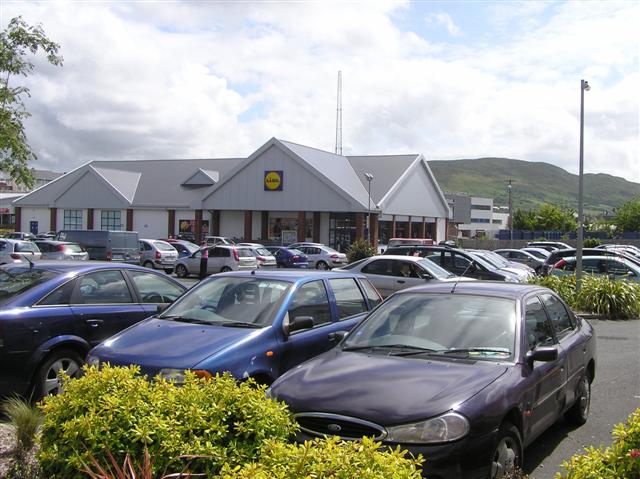
Dieter Schwarz is not a household name, even though his stores are. The founder of Lidl and Kaufland has built one of the world’s largest retail groups, the Schwarz Group, while remaining almost invisible to the public. He rarely gives interviews, avoids photographs, and is often called the phantom billionaire of German retail. His story is one of quiet expansion, tight family control, and a late-life turn toward philanthropy and education.
Early Life and Family Business
Dieter Schwarz was born on September 24, 1939, in Heilbronn, Germany. He was the only son of Josef Schwarz, a merchant who had joined a fruit wholesale business called Lidl & Co. in 1930. That business later became Lidl & Schwarz KG. Dieter grew up in a commercial household and, after finishing school, trained as a merchant in his father’s company.
In 1963, at just 24, he became the sole managing director of the family firm. In 1968, he and his father opened their first own supermarket under the name Handelshof in Backnang. Dieter wanted to avoid using his own surname for his new self-service stores, reportedly because “Schwarz-Markt” sounded unappealing to him. Instead, he chose the name Lidl, which he acquired the rights to from Ludwig Lidl, a distant relative of the original founder, for about 1,000 Deutsche Mark.
Building the Lidl and Kaufland Empire
After Josef Schwarz died in 1977, Dieter took full control of the company. By then, he already operated more than 30 Lidl stores. In 1984, the first Kaufland store opened in Neckarsulm, and the existing Handelshof outlets were rebranded as Kaufland. Following German reunification, Schwarz expanded aggressively into the new federal states, where Kaufland remains a market leader today.
In the 1990s, Lidl began its international expansion, opening stores in France, Italy, and later the Czech Republic. Today, the Schwarz Group is one of the largest grocery retailers in the world. In 2024, the group reported total sales of 175.4 billion euros and employed around 595,000 people worldwide. Lidl alone operates about 12,600 stores in 31 countries, while Kaufland runs around 1,600 stores in eight countries.
The Schwarz Group Today
The Schwarz Group now comprises five main divisions:
- Lidl: The discount chain with over 12,600 stores globally and 2024 sales of 132.1 billion euros.
- Kaufland: The full-range supermarket chain with about 1,600 stores and 2024 sales of nearly 35 billion euros.
- Schwarz Produktion: A food manufacturer producing private-label goods for Lidl and Kaufland, with around 6,000 employees.
- PreZero: A waste management and recycling company with about 30,000 employees in ten European countries.
- Schwarz Digits: A digital and IT division founded in 2023, focused on cloud and digital services.
A Quiet Retirement
In the late 1990s, Schwarz stepped back from day-to-day operations, handing leadership to long-time confidant Klaus Gehrig. In 2004, Gehrig took over the management of the trust holding company. However, Schwarz retained control over key decisions. In 2021, after a reported disagreement, Gehrig left and Gerd Chrzanowski took over. Schwarz briefly returned to lead the business during the transition, at the age of 81, underscoring his lasting influence.
Security concerns may have contributed to his retreat from public life. In the 1970s and 1980s, several wealthy business families were targeted by kidnappers, and there were reportedly threats against Schwarz’s two daughters. To this day, he gives virtually no interviews about himself or his family.
Wealth and Philanthropy
Dieter Schwarz is widely regarded as the richest person in Germany. His fortune stems from his ownership of the Schwarz Group. Forbes has estimated his net worth at around 58 billion euros, placing him among the world’s top 30 billionaires. These figures are unverified estimates and can fluctuate with market conditions.
Schwarz has transferred a large portion of his wealth to the Dieter Schwarz Foundation, which focuses on education and science in the Heilbronn region. In 2023, the foundation signed a partnership with ETH Zurich to establish about 20 professorships in Heilbronn, with a focus on digital transformation and data science. The foundation also supports the Bildungscampus in Heilbronn, where several universities, including a branch of the Technical University of Munich, have a presence.
Personal Life and Legacy
Dieter Schwarz has been married to his wife Franziska since 1963. The couple lives quietly in Heilbronn and has two daughters, Regine and Monika. Both daughters could potentially take on leadership roles in the company in the future, though no public announcements have been made.
Schwarz is known for his modesty and reluctance to seek attention. He reportedly still uses a paper calendar and has declined offers to name streets or squares after him. His foundation’s activities are concentrated almost exclusively in his hometown, where he has funded educational institutions, a science center, and a technology park. His legacy is likely to be defined not only by the retail empire he built but also by his investments in education and research that aim to shape the future of Heilbronn and beyond.
Frequently Asked Questions
Who is Dieter Schwarz?
Dieter Schwarz is a German billionaire businessman, best known as the founder of the Lidl and Kaufland retail chains. He is the owner of the Schwarz Group, one of the world’s largest retail companies.
How did Lidl get its name?
Dieter Schwarz bought the rights to the name Lidl from Ludwig Lidl, a relative of the original founder of the Lidl & Co. business, for about 1,000 Deutsche Mark. He chose it because it was short and memorable.
What is Dieter Schwarz’s net worth?
Forbes has estimated his net worth at around 58 billion euros, making him the richest person in Germany. However, this is an unverified estimate and can change over time.
Is Dieter Schwarz still involved in the company?
Although he stepped back from day-to-day operations in the late 1990s, Schwarz is said to retain significant influence over major decisions, often through his foundation and as owner.
What does the Dieter Schwarz Foundation do?
The foundation supports education, science, and research, primarily in Heilbronn. It has funded a university campus, a science center, and partnerships with institutions like ETH Zurich.
Does Dieter Schwarz give interviews?
No, he is famously media-shy and has given virtually no interviews or public statements throughout his career.
Featured image: Kenneth Allen / Wikimedia Commons (CC BY-SA 2.0).
