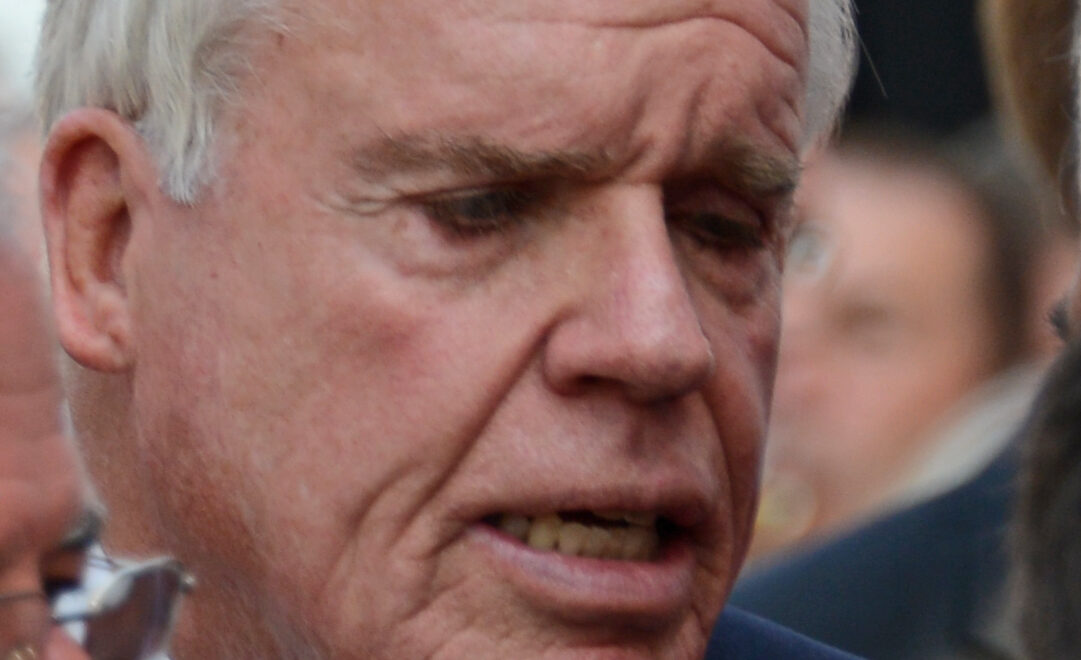
When Klaus-Michael Kühne died on 24 August 2026, at the age of 89, he left behind more than a business empire. He left behind a carefully constructed legacy of majority stakes in some of Europe’s most iconic transport companies, a foundation that overnight became one of the continent’s largest, and a fortune that had been built over six decades through sharp bets and painful lessons.
From Hamburg Beginnings to Global Logistics
Klaus-Michael Kühne was born on 2 June 1937 in Hamburg, the only child of Alfred Kühne and his Argentine wife, Mercedes. His grandfather August Kühne had co-founded the family freight forwarding business in Bremen in 1890, and the firm remained in family hands through the decades. Kühne attended school in the city’s Winterhude district, where one of his classmates was the future singer and dissident Wolf Biermann. After completing his Abitur, he trained at the private bank Münchmeyer & Co., a conventional start for the son of a merchant family. He joined the family firm in 1958 at age 21.
In 1966, his father, who had moved to Switzerland and fallen ill, handed over operational leadership to his only son. Kühne became managing director and set about turning a mid-sized forwarder focused largely on northern Germany into an international logistics group. Over the following decades, he opened offices worldwide, with the first in China in 1979, and built Kühne+Nagel into one of the world’s leading logistics companies. The firm now employs more than 85,000 people in around 100 countries, according to the company’s own figures.
A Close Call and a Buyback
Not every bet paid off. In the 1970s, Kühne wanted to build his own shipping line and bought five large vessels. The 1973 oil crisis made the heavily indebted fleet nearly worthless. To keep the company afloat, he sold half of the group to the British Lonrho conglomerate. He later described that period as one in which he almost lost everything. In 1992, long after the shipping subsidiary had been wound down, he bought back those shares for 340 million Deutsche Marks. Two years later, in 1994, he floated Kühne+Nagel on the Swiss stock exchange.
Building a Portfolio Beyond Logistics
With the proceeds from his logistics success, Kühne assembled a portfolio of significant stakes across the transport and chemicals sectors. In 2008, he was part of a consortium that rescued the container shipping line Hapag-Lloyd during the global financial crisis. He later became a major shareholder, with a stake of around 30 percent. In 2016 he bought a fifth of the rail logistics company VTG, selling it two years later for a reported profit.
He became a shareholder in Lufthansa in 2022 and eventually built his stake to more than a fifth, making him the airline’s largest single investor. He also held a substantial interest in the chemicals distributor Brenntag, a stake in the long-distance bus operator Flix, and a share of the Hamburg football club HSV. His holding company, Kühne Holding, was based in Schindellegi, Switzerland, in the canton of Schwyz, a location chosen partly for tax reasons. Kühne never hid that motivation.
Philanthropy and the Foundation
Kühne’s connection to Hamburg remained strong even after decades in Switzerland. He funded the Kühne Logistics University in the city, supported the Elbphilharmonie concert hall, and gave millions to the HSV football club. He and his wife Christine, whom he married in 1989 when he was 52, had no children. In a statement to the media, he once said, “I worked like crazy and neglected to start a family.”
The Kühne Foundation, established about 50 years ago and one of Germany’s largest, was the planned heir to his fortune. The foundation focuses on logistics education, medical research, climate projects, and humanitarian logistics. Its budget for 2026 was reported at CHF 135 million. Following his death, ownership of Kühne Holding, including the group’s stakes in Kühne+Nagel, Hapag-Lloyd, Lufthansa, Brenntag, Flix, and property such as the Fontenay hotel in Hamburg, passed to the foundation. According to reporting by Swiss newspaper Neue Zürcher Zeitung, the assets are expected to generate around CHF 1 billion in annual dividend income in a normal year.
Controversies and Character
Kühne was known as a demanding and sometimes abrasive leader. He admitted in a 2016 interview that he could be “exhausting, impatient and unpleasant” to work with. He was famous for his frugality, flying economy class and buying Mercedes cars second-hand, even as he built a multibillion-euro fortune.
He also faced criticism for his family’s and his company’s historical ties to the Nazi era. His father and uncle had removed their Jewish business partner, Adolf Maass, from the firm; Maass and his wife later died in Auschwitz. Kühne+Nagel did not acknowledge this history until 2015, and Kühne later said it was important to learn from the past. The company contributed to the Remembrance, Responsibility and Future Foundation.
In his later years, he became embroiled in a public dispute with the Austrian property investor René Benko. Kühne invested in Benko’s Signa Prime in 2020 and later lost an estimated half a billion euros when the Signa group collapsed. He said he had been “led astray” and “taken in” by Benko.
Net Worth and Estimates
During his lifetime, Kühne was regularly ranked among Germany’s wealthiest individuals and among the richest people in the world. Different sources, however, published different figures, reflecting the complexity of his holdings and the difficulty of valuing private assets.
| Source | Estimated Amount | Date | Caveat |
|---|---|---|---|
| Bloomberg Billionaires Index | $49 billion (€42.2 billion) | 2026 | Valuation based on public holdings; private assets may not be fully captured. |
| Forbes | €39.6 billion | 2026 | Figures fluctuate with market prices and are not independently verified. |
| Bilanz | CHF 21-22 billion | 2026 | Range reflects uncertainty in valuing closely held assets. |
These figures are estimates and should be treated as such. Kühne’s actual wealth may have been higher or lower, as Swiss law does not require private companies to disclose full financial details.
Frequently Asked Questions
What was Klaus-Michael Kühne’s main source of wealth?
His principal source of wealth was his controlling stake in the logistics company Kühne+Nagel, which he built into a global leader. He also held significant stakes in Hapag-Lloyd, Lufthansa, Brenntag, and Flix, among others.
When did Klaus-Michael Kühne die?
He died on 24 August 2026 in Schindellegi, Switzerland, at the age of 89.
Who inherited his fortune?
Kühne had no children. His fortune passed to the Kühne Foundation, a charitable organization he had established decades earlier.
Was Klaus-Michael Kühne married?
Yes, he was married to Christine Kühne. They married in 1989 and had no children. She survives him.
Featured image: Monster4711 / Wikimedia Commons (CC BY-SA 3.0).
