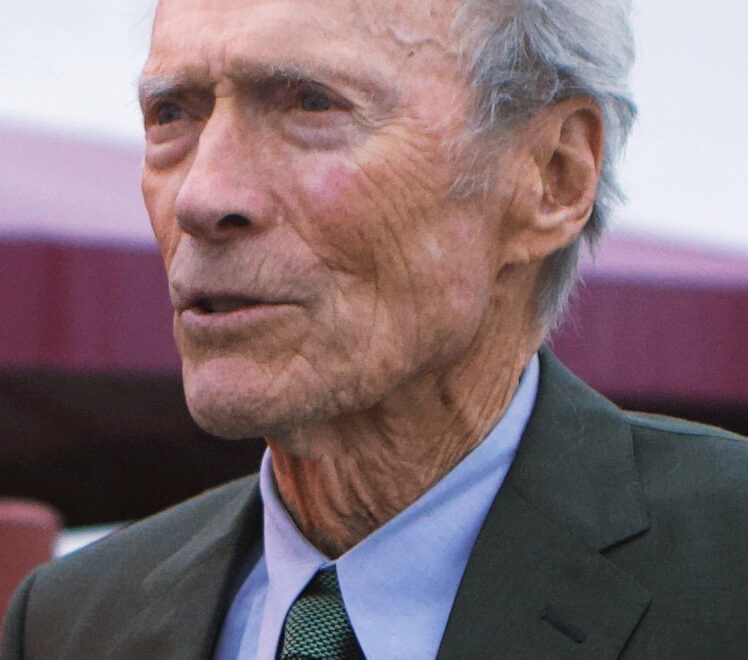
Clint Eastwood has been a fixture of American cinema for so long that it is easy to forget he was once a contract player learning his craft on the backlots of Universal. Over seven decades, he has moved from television Westerns to international stardom, then to a second, even more remarkable career as a director. His story is one of reinvention, discipline, and a stubborn commitment to telling stories his own way.
From Rawhide to the Man with No Name
Clinton Eastwood Jr. was born on May 31, 1930, in San Francisco. His family moved several times during his childhood before settling in Piedmont, California. After a stint in the Army during the Korean War, he drifted into acting, landing small roles in B-movies and eventually the television series Rawhide, which ran from 1959 to 1965.
His life changed when he accepted an offer to star in a low-budget Italian Western directed by Sergio Leone. A Fistful of Dollars (1964) was followed by For a Few Dollars More (1965) and The Good, the Bad and the Ugly (1966). The films made Eastwood a global star and redefined the Western for a new generation. The poncho, the cigar, the squint: the image became iconic.
Dirty Harry and the Box Office Peak
Back in Hollywood, Eastwood wasted no time. He formed his own production company, Malpaso, and began steering his career with unusual independence. The 1970s brought the role of Harry Callahan in Dirty Harry (1971), a character whose ruthless approach to justice sparked debate but also spawned four sequels.
He also proved he could draw crowds in lighter fare. Every Which Way but Loose (1978) and its sequel Any Which Way You Can (1980) were among his biggest commercial hits, though critics often dismissed them. Eastwood didn’t mind. He was building a body of work on his own terms.
The Director’s Chair
Eastwood had started directing in 1971 with Play Misty for Me, a thriller that showed an early instinct for mood and tension. But it was in the 1990s that his directing career reached new heights. Unforgiven (1992), a elegiac Western he starred in and directed, won four Academy Awards, including Best Picture and Best Director. It was a turning point that cemented his reputation as a serious filmmaker.
He followed with a remarkable run of dramas: A Perfect World (1993), The Bridges of Madison County (1995), and Midnight in the Garden of Good and Evil (1997). In 2003, Mystic River earned him another Best Director nomination, and the following year Million Dollar Baby won Best Picture and Best Director. He was now a two-time Oscar winner behind the camera.
Eastwood’s range as a director expanded further with Letters from Iwo Jima (2006), a Japanese-language war film that received a Best Picture nomination, and Changeling (2008), a period drama starring Angelina Jolie. His productivity was legendary; he often shot films quickly and under budget, a habit formed during his years at Malpaso.
A Late-Career Renaissance
In his 80s, Eastwood showed no signs of slowing down. Gran Torino (2008), which he starred in and directed, was a surprise hit. American Sniper (2014) became a box-office phenomenon, setting records for a January release. He also directed biographical dramas such as J. Edgar (2011), Jersey Boys (2014), and Richard Jewell (2019).
His most recent film as director, Juror #2 (2024), a courtroom thriller, was released when he was 94. Though some speculated it might be his final film, Eastwood has not confirmed any retirement. In fact, in 2025 he denied giving an interview that suggested he was slowing down, and his son Kyle mentioned in late 2025 that his father was enjoying a quieter life, though no formal announcement has been made.
Beyond the Camera
Eastwood’s influence extends beyond film. He served as mayor of Carmel-by-the-Sea, California, from 1986 to 1988, a period he later described as an education in local politics. He is also a composer and occasional pianist, contributing scores to several of his films, including Mystic River and Million Dollar Baby.
His personal life has been widely covered. He has eight children with six women, a family dynamic that has often drawn media attention. While he rarely discusses his private life, his children have occasionally spoken about him. Some have followed him into entertainment, including actor Scott Eastwood and jazz musician Kyle Eastwood.
Net Worth
Various outlets have published estimates of Eastwood’s net worth, but these are unverified and should be treated with caution. A frequently cited figure is $375 million, mentioned in sources such as Marca and Encyclopedia.com. These estimates vary and are not confirmed by Eastwood or his representatives.
Frequently Asked Questions
Is Clint Eastwood still directing?
His last film as director was Juror #2 in 2024. He has not announced retirement, though his son suggested in 2025 that he is taking a step back.
How many Oscars has Clint Eastwood won?
He has won four Academy Awards: Best Director and Best Picture for Unforgiven and Million Dollar Baby. He also received the Irving G. Thalberg Memorial Award in 1995.
What is Clint Eastwood’s most famous role?
He is widely known for the Man with No Name in Sergio Leone’s Dollars Trilogy and as Harry Callahan in the Dirty Harry films.
Did Clint Eastwood serve in the military?
Yes, he was drafted into the U.S. Army during the Korean War and served stateside as a lifeguard at Fort Ord.
What is Clint Eastwood’s net worth?
Estimates vary, but some sources cite around $375 million. These figures are unverified.
Featured image: Lance Cpl. Melissa I. Ugalde / Wikimedia Commons (Public domain).
