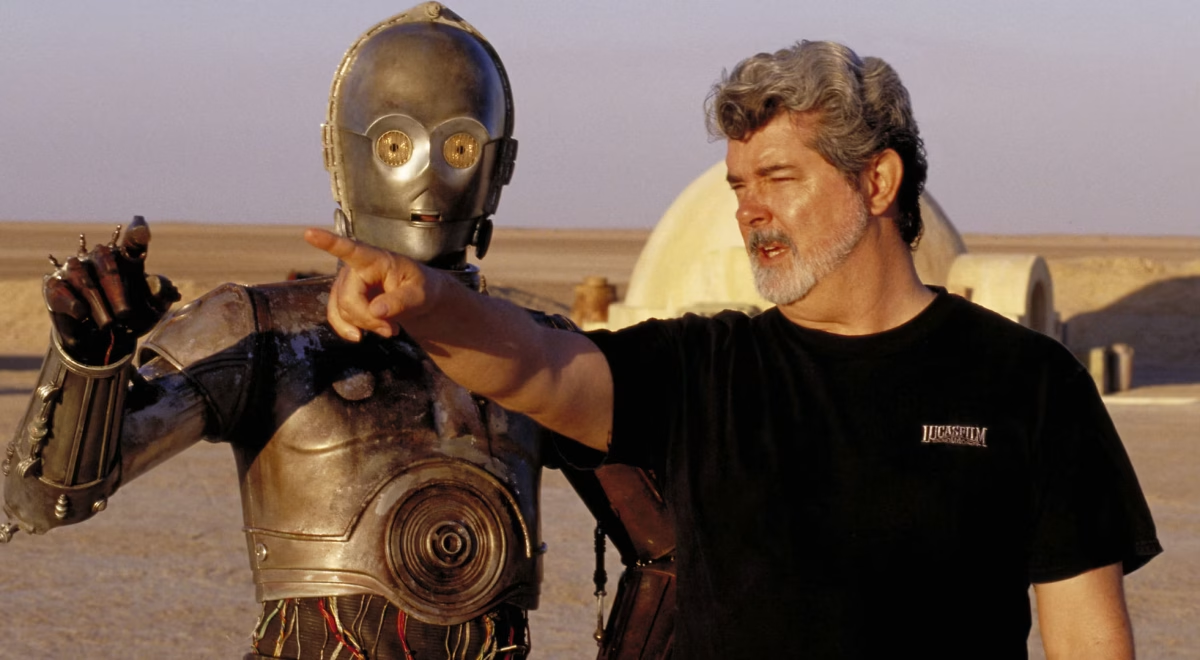
George Lucas is the filmmaker who turned a risky space opera into one of the most profitable franchises in entertainment history, and in the process rewrote the rules of how creators share in the value they create. Born on May 14, 1944, in Modesto, California, Lucas studied film at the University of Southern California, where he met fellow future Hollywood heavyweights Francis Ford Coppola and Steven Spielberg. His early feature THX 1138 (1971) and the coming-of-age hit American Graffiti (1973) established him as a distinctive new voice before Star Wars changed everything in 1977.
From Modesto to a Galaxy Far, Far Away
Lucas’s path to blockbuster success was anything but overnight. After THX 1138 underperformed and American Graffiti proved a critical and commercial breakthrough, he pitched a Flash Gordon-inspired space adventure that most studios didn’t understand. When 20th Century Fox finally greenlit Star Wars, the budget was modest and the expectations lower still. The film’s runaway success stunned the industry and made Lucas a household name.
The Deal That Changed Hollywood
Perhaps no decision shaped Lucas’s career and fortune more than the contract he negotiated with Fox. In exchange for a reduced upfront salary, Lucas secured control over sequel rights and, crucially, merchandising. At the time, few saw the value in toy sales for a sci-fi movie. Lucas did. That bet turned Star Wars into a licensing juggernaut and gave him the independence to fund future projects, including The Empire Strikes Back, largely on his own terms.
The wisdom of that arrangement became clear as Star Wars toys, shirts, and collectibles generated hundreds of millions of dollars. Lucas later renegotiated merchandising deals when Hasbro took over from Kenner, further strengthening his position. The move set a template for creator-owned franchises that continues to influence dealmaking today.
Building Lucasfilm and a Technology Powerhouse
Lucas didn’t just make movies; he built companies that changed how movies are made. He founded Lucasfilm in 1971 and later launched Industrial Light & Magic (ILM) in 1975 to create the visual effects for Star Wars. ILM went on to pioneer numerous techniques and became an industry leader in visual effects and computer animation. Skywalker Sound, focused on audio post-production, and THX, a quality assurance standard for cinemas and home theaters, also emerged from Lucas’s drive to control the technical side of storytelling.
An animation division within Lucasfilm eventually evolved into Pixar, the studio behind Toy Story and countless acclaimed animated features. While Lucas did not remain at the helm of Pixar, the throughline is clear: he invested in technology and talent that pushed the medium forward.
Indiana Jones and Other Adventures
Beyond Star Wars, Lucas created and produced the Indiana Jones franchise, beginning with Raiders of the Lost Ark in 1981. Directed by Steven Spielberg and starring Harrison Ford, the series became another cultural touchstone. Lucas’s involvement varied across the films, but his fingerprint as a story architect remained. He also produced or co-wrote other projects over the decades, though none matched the scale of his two signature franchises.
Selling Lucasfilm to Disney
In 2012, Lucas sold Lucasfilm to The Walt Disney Company for $4.05 billion. The deal included Star Wars and Indiana Jones, along with ILM and Skywalker Sound. Lucas initially sought a valuation closer to what Disney had paid for Pixar, but Disney CEO Bob Iger negotiated a lower figure, citing the need to build a new film pipeline and the absence of other directors at Lucasfilm. Lucas also wrote treatments for a sequel trilogy that Disney ultimately did not use.
Lucas has said he stepped away partly because the industry was shifting toward streaming and he felt out of step with the new landscape. In a 2024 Cannes interview, he explained that the rise of Netflix and changing viewing habits convinced him it was time to sell and retire. He received the Honorary Palme d’Or at the 77th Cannes Film Festival that year.
Life After Star Wars
Since the sale, Lucas has largely stayed out of the spotlight. He has focused on philanthropy and personal projects, including the Lucas Museum of Narrative Art in Los Angeles, which is scheduled to open in 2026. The museum will house a vast collection of art and memorabilia celebrating visual storytelling. Lucas has also donated to educational causes, including a 2021 gift to New York University’s Tisch School of the Arts, and his George Lucas Educational Foundation, now known as Edutopia, has long supported innovative teaching.
He remains a major figure in the entertainment industry, occasionally commenting on the franchise he created. His legacy is not only a body of work but a business model that empowered creators to share in the long-term value of their ideas.
Public Recognition and Influence
Lucas has received numerous honors, including the Irving G. Thalberg Memorial Award from the Academy of Motion Picture Arts and Sciences and a place among the highest-grossing filmmakers of all time. Ten of the 100 highest-grossing movies in North America were directed or created by him, a testament to the reach of his imagination. His use of technology, from ILM’s effects to digital cinema, helped shape modern blockbuster filmmaking.
George Lucas Net Worth: What the Estimates Say
Public estimates of George Lucas’s net worth vary and should be treated as unverified. Forbes has reported figures around $5.5 billion, while other outlets such as El País have cited approximately $5.2 billion. These numbers are not audited financial statements; they are journalistic estimates based on available information about asset values, the Disney sale, and ongoing revenue streams. The table below summarizes published estimates with their sources and dates.
| Source | Published Amount (USD) | Date/Year | Caveat |
|---|---|---|---|
| Forbes (via ScreenRant) | $5.5 billion | 2024 | Unverified estimate; not an audited figure. |
| Forbes (via El País) | $5.2 billion | 2024 | Unverified estimate; not an audited figure. |
Documented facts include the $4.05 billion sale of Lucasfilm to Disney in 2012 and Lucas’s ownership stakes in various enterprises, but his exact personal wealth is not publicly disclosed. The figures above reflect media estimates and may change over time.
Frequently Asked Questions
Did George Lucas direct all the Star Wars films?
No. Lucas directed A New Hope, The Phantom Menace, Attack of the Clones, and Revenge of the Sith. He wrote or produced the others, with directors including Irvin Kershner, Richard Marquand, and J.J. Abrams.
Why did George Lucas sell Lucasfilm?
Lucas has said the industry was moving toward streaming, and he felt he was not suited to that new era. He also wanted to secure the future of the company and its employees.
What is George Lucas doing now?
He is retired from active filmmaking and focuses on philanthropy and the Lucas Museum of Narrative Art, which is set to open in Los Angeles in 2026.
Is George Lucas still involved with Star Wars?
He has no day-to-day role at Lucasfilm under Disney, though he has visited sets and commented on the franchise. His original treatments for a sequel trilogy were not used.
Featured image: Eric Draper, Office of White House Management, Photography Office. / Wikimedia Commons (Public domain).
