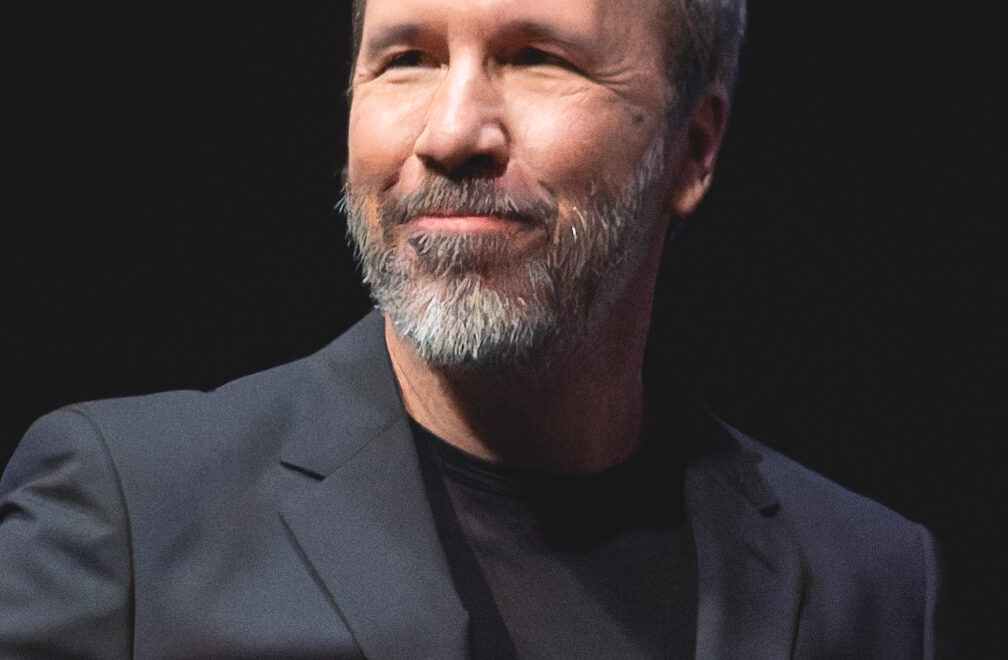
Denis Villeneuve was born on October 3, 1967, in Gentilly, Quebec, a small town in the Centre-du-Québec region. He grew up in a modest household and was, by his own account, a shy child who found refuge in imagination. He studied at the Université du Québec à Montréal, where he made his first short films. His early work, including the short La course destination monde (1988), hinted at a filmmaker with a distinct voice.
Early Career in Quebec Cinema
Villeneuve’s feature debut, August 32nd on Earth (1998), was a critical success in Canada. His follow-up, Maelström (2000), won him the Genie Award for Best Director, establishing him as a rising talent in Quebec. However, it was Polytechnique (2009), a stark drama about the 1989 École Polytechnique massacre, that earned him widespread acclaim and multiple Genie Awards, including Best Director. The film’s unflinching look at violence and grief set the tone for much of his later work.
In 2010, Incendies premiered to international praise. Adapted from Wajdi Mouawad’s play, the film follows twins uncovering their mother’s traumatic past in the Middle East. It was nominated for the Academy Award for Best Foreign Language Film and won numerous Canadian Screen Awards, including Best Director and Best Adapted Screenplay. The success of Incendies opened doors to Hollywood.
Transition to English-Language Films
Villeneuve’s first English-language film was Prisoners (2013), a tense thriller starring Hugh Jackman and Jake Gyllenhaal. The film was a critical and commercial success, and it demonstrated his ability to work with A-list actors and complex narratives. That same year, he directed Enemy, a surreal psychological thriller also starring Gyllenhaal. Both films showcased his knack for atmosphere and moral ambiguity.
In 2015, Sicario further cemented his reputation. The film, about a principled FBI agent caught in the morally murky war on drugs, earned three Oscar nominations and was praised for its relentless tension and Emily Blunt’s performance. Villeneuve was now a sought-after director in Hollywood.
Science Fiction and Blockbuster Success
Villeneuve’s foray into science fiction began with Arrival (2016), a thought-provoking drama about a linguist communicating with alien visitors. The film was nominated for eight Academy Awards, including Best Picture and Best Director. It won for Best Sound Editing and was widely celebrated for its emotional depth and intelligent storytelling. The following year, he directed Blade Runner 2049, the sequel to Ridley Scott’s 1982 classic. While it underperformed at the box office, it was critically lauded and won two Oscars for cinematography and visual effects. The film’s stunning visuals and meditative pace confirmed Villeneuve’s status as a master of speculative fiction.
His next project was the ambitious two-part adaptation of Frank Herbert’s Dune. The first part, released in 2021, was a critical and commercial triumph, winning six Academy Awards. The second part, released in 2024, was even more successful, grossing over $700 million worldwide and earning widespread acclaim. Together, the two films have grossed more than $1.1 billion globally. Villeneuve has confirmed that a third film, Dune: Messiah, is in development.
Upcoming Projects
Beyond Dune, Villeneuve is attached to direct an adaptation of Arthur C. Clarke’s Rendezvous with Rama, a project he has long wanted to make. He has also been linked to a James Bond film, though no official confirmation has been made. In 2024, he was named a Knight of the Order of Arts and Letters by the French government, recognizing his contribution to cinema.
Net Worth
Estimates of Denis Villeneuve’s net worth vary. As of 2025, one source, BBN Times, estimated his net worth at approximately $40 million, though this figure is unverified and should be treated as speculative. Such estimates are based on reported salaries, box office success, and industry standing, but they are not confirmed by Villeneuve or his representatives.
Frequently Asked Questions
What is Denis Villeneuve’s most famous film?
He is best known for Dune (2021) and Dune: Part Two (2024), as well as Arrival (2016) and Blade Runner 2049 (2017).
Has Denis Villeneuve won an Oscar?
He has been nominated for multiple Academy Awards but has not won a competitive Oscar. His films have collectively won numerous Oscars, including six for Dune.
What is Denis Villeneuve’s next movie?
He is currently working on Dune: Messiah, which is expected to conclude his Dune trilogy. He is also attached to adapt Rendezvous with Rama.
Where was Denis Villeneuve born?
He was born in Gentilly, Quebec, Canada, on October 3, 1967.
Featured image: Raph_PH / Wikimedia Commons (CC BY 2.0).
