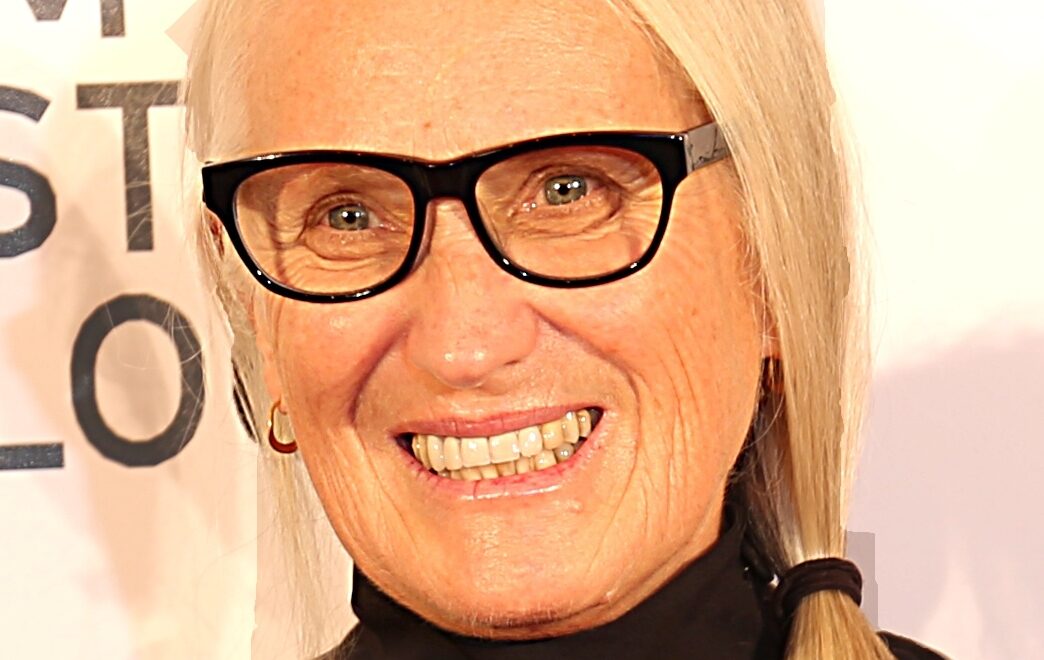
Jane Campion has never made films on anyone else’s schedule. Across four decades she has released a small, fiercely personal body of work, and in doing so she became the first woman to win the Palme d’Or at Cannes and, later, only the third woman in history to take the Academy Award for Best Director. Her career is a study in patience, conviction and the long game of an artist who trusts her own instincts.
Early Life in a Theatre Family
Elizabeth Jane Campion was born on April 30, 1954, in Wellington, New Zealand. She grew up inside the performing arts: her father, Richard Campion, directed theatre and opera, and her mother, Edith Campion, was an actress and writer. The couple co-founded the New Zealand Players, one of the country’s first professional touring theatre companies, and their home was filled with rehearsals and backstage conversation. Campion has an older sister, Anna, who also became a filmmaker, and a younger brother, Michael.
Perhaps because she grew up surrounded by drama, Campion initially steered away from it. She attended Queen Margaret College and Wellington Girls’ College, then enrolled at Victoria University of Wellington, graduating with a Bachelor of Arts in Anthropology in 1975. That interest in how people organize their lives and understand themselves would echo through her films, which return again and again to interior worlds, unspoken desire and the gap between what people say and what they feel.
After university she travelled to Europe and studied painting at Chelsea Art School in London in 1976. She later moved to Sydney and completed a graduate diploma in visual arts with a painting major at the Sydney College of the Arts in 1981. It was there that she turned toward moving images, drawn by the way film could combine her visual training with her curiosity about human behavior.
Film School and the First Shorts
In 1981 Campion entered the Australian Film, Television and Radio School, graduating in 1984. Her student shorts quickly marked her as a distinctive voice. Peel: An Exercise in Discipline (1982) won the Palme d’Or for best short film at Cannes, and A Girl’s Own Story (1984) explored adolescent girlhood with a frankness that was unusual at the time. These early works already carried the hallmarks of her mature style: precise framing, emotional honesty and a willingness to sit with discomfort.
Her first feature, Sweetie (1989), arrived as a jolt to Australian cinema, winning prizes and announcing a filmmaker with an unmistakable eye. An Angel at My Table (1990), her adaptation of Janet Frame’s autobiographies, followed and brought her international recognition, including a Silver Lion at the Venice Film Festival.
The Piano and the Palme d’Or
Everything changed with The Piano (1993). Written and directed by Campion, the film starred Holly Hunter as Ada McGrath, a mute Scottish woman sent to New Zealand for an arranged marriage, with Harvey Keitel and Anna Paquin in key roles. It won the Palme d’Or at Cannes, making Campion the first woman to receive the festival’s top prize, and it went on to earn her the Academy Award for Best Original Screenplay. She was also nominated for Best Director. The film’s commercial performance was remarkable for an art house title, and its reputation has only grown.
What followed was a period in which Campion took risks that did not always pay off with critics at the time. Her adaptation of Henry James’s The Portrait of a Lady (1996), starring Nicole Kidman, was sharply received on release and has since been reassessed. In the Cut (2003), with Meg Ryan and Mark Ruffalo, met a similarly hostile initial response and has since gathered a devoted following. Campion has spoken about those years with equanimity, describing her approach as shutting out the noise and continuing to work. She has said she would love to have a cult film, and In the Cut may yet grant her wish.
Television and Top of the Lake
Campion moved into long form television with Top of the Lake, co-created with Gerard Lee and starring Elisabeth Moss. The series ran for two seasons, the first beginning in 2013 and the second, China Girl, in 2017. The shift suited her patient, atmospheric storytelling, and it introduced her work to audiences who might not have sought out her features. She has also taught, including a faculty position at the European Graduate School in Switzerland.
The Power of the Dog and a Late Career Peak
With The Power of the Dog (2021), Campion adapted Thomas Savage’s novel into a slow burning western starring Benedict Cumberbatch, Kirsten Dunst, Jesse Plemons and Kodi Smit-McPhee. Released by Netflix, the film drew twelve Academy Award nominations and won Campion the Best Director Oscar, making her only the third woman to win the category. She had previously been the first woman to be nominated twice for Best Director, following her nomination for The Piano.
The success arrived late in her career and clearly surprised her. Speaking at the Locarno Film Festival in 2024, where she received a lifetime achievement award, Campion said she had thought she was finished making films and had planned to run a pop-up school for aspiring filmmakers in New Zealand. She described the thrill of a late career success and the pleasure of giving back, while noting that new ideas had started to surface. She also reflected on how the industry has changed, recalling the famous photograph of Palme d’Or winners in which she was the only woman, and speaking warmly about younger directors such as Justine Triet and Julia Ducournau. She praised Greta Gerwig’s Barbie, saying its success showed that women could finally be trusted with money.
Personal Life
Campion was married to Australian director Colin Englert from 1992 to 2001. The couple had two children. Their son Jasper died shortly after birth, a loss Campion has discussed with rare candor, describing how it changed her perspective permanently. Their daughter, Alice Englert, born in 1994, is an actress and filmmaker who appeared in The Power of the Dog. Campion has lived in Sydney for many years.
Net Worth
Published figures for Campion’s personal wealth are estimates rather than documented facts, and they should be read with caution. Celebrity Net Worth, as reported by The Sun in March 2022, placed her estimated net worth at $10 million. A separate 2026 profile on a net worth tracking site also estimated her fortune at roughly $10 million. Neither figure has been confirmed by Campion or her representatives, and neither reflects a full accounting of her earnings, royalties or property holdings.
Legacy and What Comes Next
Campion’s filmography is short by the standards of her peers, but its influence is outsized. She has shown that a director can work slowly, follow her own preoccupations and still reach the top of the profession. Her films return to women who are difficult to categorize and to stories that resist neat resolution. At a time when the industry is still arguing about who gets to tell which stories, her example remains instructive.
She has hinted at new projects without sharing details, and she has said she knows there will be money for her work because the industry believes another good film is coming. Whether or not that proves true, Campion’s place in cinema history is secure, built one carefully chosen film at a time.
Frequently Asked Questions
What is Jane Campion best known for?
She is best known for The Piano (1993), which won the Palme d’Or at Cannes and earned her an Academy Award for Best Original Screenplay, and for The Power of the Dog (2021), which won her the Academy Award for Best Director.
How many Academy Awards has Jane Campion won?
She has won two competitive Academy Awards: Best Original Screenplay for The Piano and Best Director for The Power of the Dog.
What is Jane Campion’s net worth?
Estimates published by celebrity wealth trackers have placed her net worth at around $10 million, but these figures are unverified and not confirmed by Campion or her representatives.
Who is Jane Campion’s daughter?
Her daughter is Alice Englert, an actress and filmmaker who appeared in The Power of the Dog. Campion also had a son, Jasper, who died shortly after birth.
Has Jane Campion retired?
No. She has said she considered stepping back after The Power of the Dog but has since indicated that new ideas are emerging, and she remains active in the industry.
Featured image: 9EkieraM1 / Wikimedia Commons (CC BY-SA 3.0).
