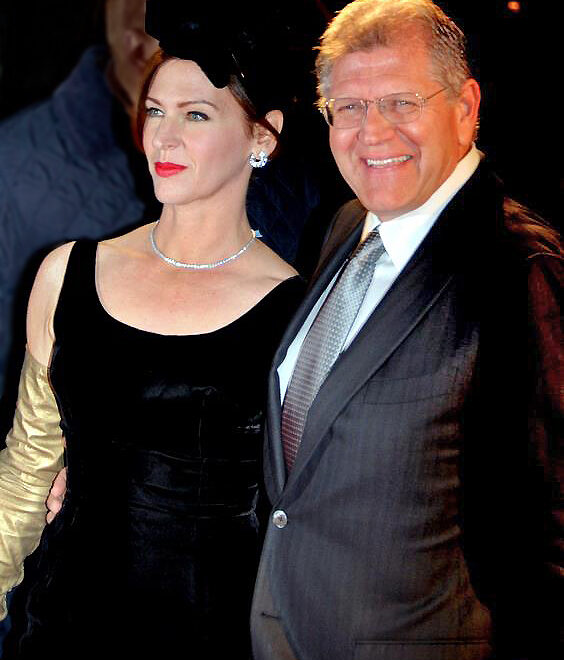
Robert Zemeckis is an American filmmaker whose name became synonymous with technological innovation and crowd-pleasing storytelling. From the time-traveling adventures of Back to the Future to the emotional sweep of Forrest Gump, he has spent more than four decades pushing the boundaries of what movies can do. This biography explores his life, his landmark films, and the restless curiosity that keeps him experimenting.
Early Life and Education
Robert Lee Zemeckis was born on May 14, 1952, in Chicago, Illinois, and grew up in the city’s Roseland neighborhood. His father, Alphonse, worked in a factory, and his mother, Rosalie, was a homemaker. Zemeckis has described a childhood with little exposure to art or film, but television and an 8mm camera opened a door. He began making short films with friends, staging small narratives rather than home movies.
After graduating from high school, he attended Northern Illinois University before transferring to the University of Southern California’s School of Cinematic Arts. There he met fellow student Bob Gale, who would become his longtime writing partner. Zemeckis’s student film A Field of Honor (1973) won a Student Academy Award and caught the attention of Steven Spielberg. That early recognition proved crucial: Spielberg would serve as a mentor and producer on several of Zemeckis’s early features.
Early Career and Breakthrough
Zemeckis made his feature directorial debut with I Wanna Hold Your Hand (1978), a comedy about teenagers trying to meet the Beatles. Produced by Spielberg, the film earned positive reviews but failed to find a wide audience. He and Gale then co-wrote the screenplay for Spielberg’s 1941 (1979), a big-budget comedy that received mixed notices.
His next directorial effort, Used Cars (1980), starred Kurt Russell as a scheming car salesman and also underperformed commercially. Despite the setbacks, Zemeckis’s talent for visual comedy and energetic storytelling was evident. The turning point came with Romancing the Stone (1984), an adventure-comedy starring Michael Douglas and Kathleen Turner that became a surprise hit. Its success gave Zemeckis the leverage to revive a project he and Gale had been trying to make for years: Back to the Future.
The Back to the Future Phenomenon
Released in 1985, Back to the Future became the highest-grossing film of the year and a cultural touchstone. Starring Michael J. Fox as Marty McFly and Christopher Lloyd as Doc Brown, it combined time travel, comedy, and genuine emotion. The film spawned two sequels, Back to the Future Part II (1989) and Back to the Future Part III (1990), both directed by Zemeckis. The trilogy remains beloved and has inspired a stage musical.
Between the first two sequels, Zemeckis directed Who Framed Roger Rabbit (1988), a groundbreaking hybrid of live action and animation that won three Academy Awards. The film’s technical achievements and witty screenplay further cemented his reputation as a master of inventive entertainment.
Oscar Glory and Technical Innovation
In 1994, Zemeckis directed Forrest Gump, starring Tom Hanks as a simple man who inadvertently influences key moments in American history. The film won six Academy Awards, including Best Picture and Best Director for Zemeckis. It became a cultural phenomenon and remains one of the most quoted films of the 1990s.
Zemeckis continued to explore new technology. He directed The Polar Express (2004), the first feature film made entirely with motion-capture technology. While the film received mixed reviews, it was a commercial success and showcased his fascination with digital tools. He went on to use motion capture in Beowulf (2007) and A Christmas Carol (2009).
Later Career and Recent Work
In the 2010s, Zemeckis returned to live-action filmmaking with Flight (2012), starring Denzel Washington, and The Walk (2015), about Philippe Petit’s high-wire walk between the Twin Towers. He also directed Allied (2016) and Welcome to Marwen (2018). In 2020, he directed a new adaptation of The Witches, and in 2022, a live-action Pinocchio for Disney+.
His most recent film, Here (2024), reunited him with Tom Hanks and Robin Wright. Based on a graphic novel, the film uses a fixed camera angle to tell the story of a single room across centuries. It was released by Sony Pictures Classics.
Personal Life
Zemeckis was married to actress Mary Ellen Trainor from 1980 to 2000; they had one son. In 2001, he married actress Leslie Harter, with whom he has three children. He is a licensed private pilot and has logged thousands of hours of flight time.
Net Worth
Estimates of Robert Zemeckis’s net worth vary. As of 2026, at least one source (CompareTV) estimates his net worth at $80 million. This figure is unverified and should be treated as an estimate rather than a confirmed fact. Zemeckis’s wealth stems from his long career as a director, producer, and writer of successful films.
Frequently Asked Questions
What is Robert Zemeckis known for?
He is best known for directing Back to the Future, Forrest Gump, Who Framed Roger Rabbit, and Cast Away, among many others.
How many Oscars has Robert Zemeckis won?
He has won one Academy Award for Best Director for Forrest Gump. The film also won Best Picture.
What was Robert Zemeckis’s first film?
His feature directorial debut was I Wanna Hold Your Hand (1978).
Is Robert Zemeckis still making movies?
Yes, his latest film Here was released in 2024.
Featured image: Georges Biard / Wikimedia Commons (CC BY-SA 3.0).
