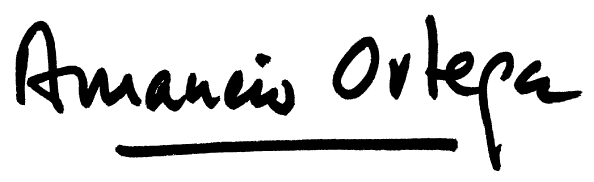
Amancio Ortega is the Spanish businessman who turned a small clothing workshop in A Coruna into Inditex, the retail group behind Zara, Massimo Dutti, Pull&Bear, Bershka, Stradivarius and Oysho. His life story is often reduced to a single number, the fortune attached to his name, but the more instructive parts are the decisions behind it: keeping production close, selling quickly, avoiding headlines and putting almost everything back into the business.
Origins: Busdongo, A Coruna and the shirt shop
Ortega was born on 28 March 1936 in Busdongo de Arbas, in the province of Leon, into a family where his father worked for the railway. The family later settled in A Coruna, the Galician city that he has always treated as home ground.
He left school early and found work at La Maja, a shirt shop in the city where, according to published profiles, he began as an errand boy before rising to shop assistant. The job taught him how the clothing trade actually worked: margins per item, the value of knowing your customers, and how quickly demand shifts. It was there that he met Rosalia Mera, who would later become his wife and an important partner in the early venture.
From bathrobes to a first company
Ortega and Mera, working with relatives, started sewing quilted bathrobes and other garments at home, turning the business into a supplier for local retailers. The model was simple and effective: keep prices reachable without cutting production quality, and respond fast when an order or a trend changed.
Those early garments widened into shirts, sportswear and more. In the 1960s Ortega was involved in Confecciones GOA, an industrial manufacturing operation that gave him control over the production side of the clothing chain. The lesson would shape everything that followed. If production could be planned close to the shops, excess stock and discounting could be avoided.
The first Zara store
In 1975 the first Zara store opened in A Coruna. It is often said that Ortega wanted a retail outlet because a distributor had withdrawn an order, but the wider point is this: Zara was designed as a flexible retailer, not a print catalogue. Store teams learned what shoppers asked for, and the supply chain was organised to deliver new stock quickly and in limited quantities.
Zara grew across Spain, and in 1988 it opened outside the country, in Porto, Portugal. Expansion into larger markets followed. The group that emerged, Inditex, went on to add brands with their own identities and opened stores in the world’s main shopping cities.
How the Inditex model works
The retail system Ortega shaped is often summarised in a few principles:
- Short supply cycles. What works in stores is made again; what does not moves on quickly.
- Many small shipments. Stores receive fresh items often, which keeps customers curious and reduces the need for costly end of season markdowns.
- Retail decides. Store managers are not passive receivers of product; their feedback shapes the range.
- Production close to home. A significant share of Spanish production was kept in Spain and nearby countries, giving the company speed and oversight.
Ortega has described his own view of the business in the book Por que unas tiendas venden y otras no by Luis Lara and Jorge Mas. He said: “If I have earned so much money, it is because my objective was never to earn money.” He also argued that “if there is no growth, a company dies,” and that companies must stay alive for the people who work in them.
Public listing, ownership and Pontegadea
Inditex was listed on the stock market in 2001. Ortega became and remained its largest shareholder, while his own financial affairs were organised through the family holding Pontegadea.
Pontegadea is best known for property. Over two decades Ortega has built a portfolio of office, retail and hotel buildings in major cities, and the holding is frequently described as one of Europe’s larger private family offices. Published estimates of the portfolio’s size and value vary widely, so any figures should be read as unconfirmed.
Leadership and the next generation
Ortega stepped back from the executive chairmanship in 2011, and Pablo Isla served as chief executive until 2022. Marta Ortega, his daughter, became chair of Inditex that year. Capping a management career that began inside the fashion business, she now presides over the group her father built.
In a 2026 interview reported by ABC, Ortega was described as being 90 years old and still observing the fruit of his family’s work. He rarely gives interviews and has long avoided the ceremonial side of corporate life.
Net worth: what figures tell us and what they do not
Ortega’s wealth is measured by business publications because most of it is tied to the market value of Inditex shares and, separately, to property holdings. Those calculations are estimates, not audited totals, and they move with share prices.
Estimates published in 2026 ranged from about 127 billion euros to more than 141 billion dollars, depending on the source and the date. Forbes’ 2026 list is quoted at around 148 billion dollars by ABC, while money.it cites a Forbes estimate of more than 141 billion dollars. The differences arise from timing, exchange rates and the treatment of dividends and private assets.
Net Worth Summary of Estimates
| Source | Published estimate | Date or year | Caveat |
|---|---|---|---|
| ABC (citing Forbes 2026 list) | 148 billion USD | 2026 | Unverified estimate; depends on Inditex share price |
| Noticias Trabajo (citing Forbes) | 127 billion EUR | 2026 | Unverified estimate; currency differs from other figures |
| money.it (citing Forbes) | 141 billion USD | 2026 | Unverified estimate; date and exchange rate affect total |
The table shows what different sources publish; it does not confirm a precise fortune or reconcile the amounts.
Philanthropy and the Fundacion Amancio Ortega
The Fundacion Amancio Ortega, created in 2001, works in education and health in Spain and Galicia. It has funded scholarships for study in English speaking countries and supported cancer care equipment and facilities. Ortega does not court publicity for this work, and the foundation operates with a low profile compared with its scale.
Why Amancio Ortega still matters
Ortega is not a celebrity executive. He does not publish personal finance columns or headline boardroom battles. What makes him worth studying in 2026 is the model he built: a retailer that treats stores as a live experiment, production as a control system and restraint as a virtue. His fortune is a consequence, as he himself insists, rather than the point of the exercise.
FAQ
Who is Amancio Ortega?
He is the Spanish businessman who founded Zara and Inditex, the fashion group behind brands such as Massimo Dutti, Pull&Bear and Bershka.
When was the first Zara store opened?
The first Zara store opened in A Coruna in 1975.
What is Pontegadea?
Pontegadea is Ortega’s family holding company, best known for its property investments and for holding his Inditex stake.
Who leads Inditex now?
Marta Ortega, his daughter, became chair of Inditex in 2022. Oscar Garcia Maceiras is chief executive.
How much is Amancio Ortega worth?
Estimates in 2026 ranged from about 127 billion euros to more than 141 billion dollars, with one Forbes list figure reported at 148 billion dollars. These are unverified estimates, not official valuations.
Does Amancio Ortega give interviews?
Rarely. His business philosophy is largely known through published books and the occasional reported remark.
Featured image: Amancio Ortega Gaona / Wikimedia Commons (Public domain).
